
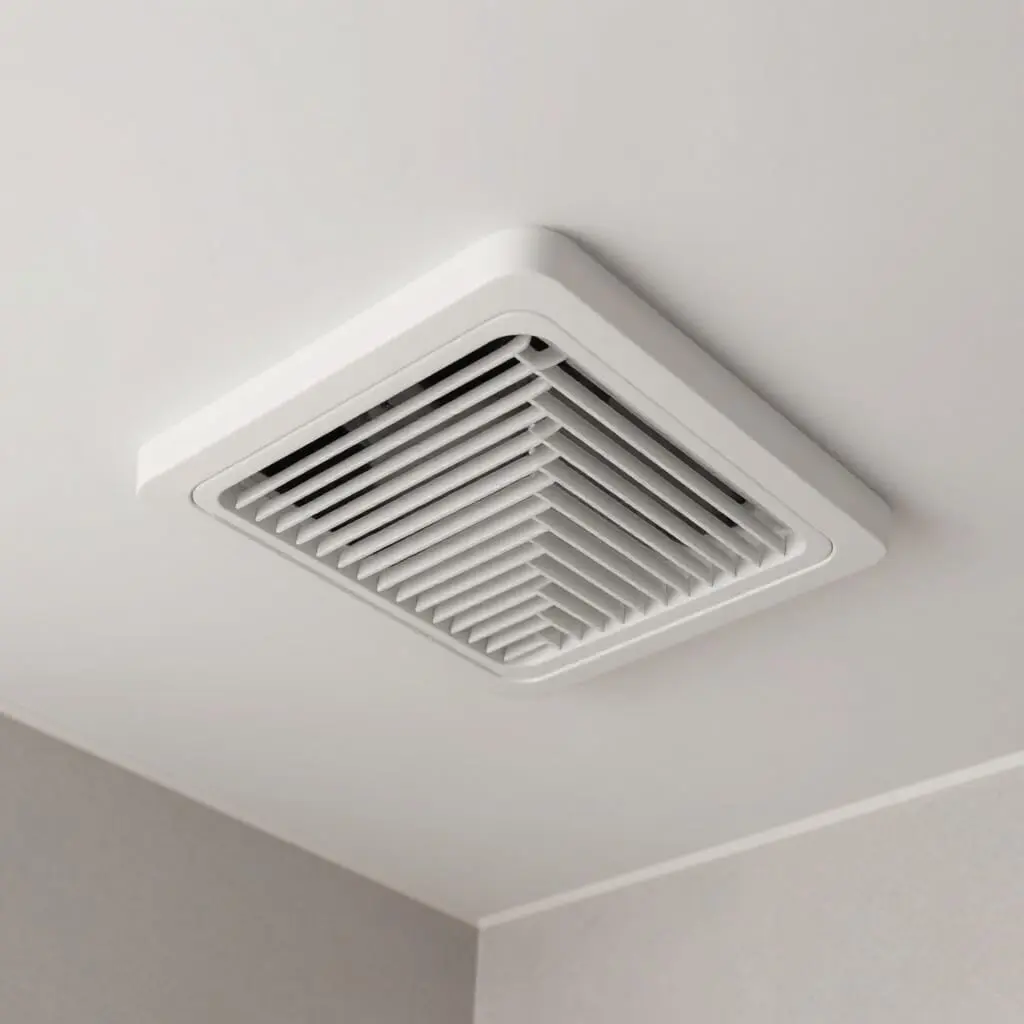
Single vs. Dual-Flow Ventilation: Key Differences and How to Choose
- Single-flow ventilation extracts stale air from humid rooms without treating the incoming fresh air, whereas dual-flow (MVHR) supplies filtered, preheated air via a heat exchanger.
- In terms of cost, expect to pay between €250 and €700 for a single-flow system (installed), compared to €2,000 to €7,700 for a dual-flow system, including ductwork and installation.
- Dual-flow systems recover up to 90% of the heat from the extracted air—a major advantage for new builds or heavily insulated major renovations.
- For renovating older, poorly insulated homes, humidity-controlled single-flow ventilation is often the most rational choice, both technically and budget-wise.
- The choice depends on three main criteria: your home’s insulation level, your available budget, and whether it is feasible to install a double duct network.
When looking at ventilation quotes, the question always arises: single-flow or dual-flow? The difference can be summarized in one sentence: single-flow simply extracts stale air from humid rooms while allowing fresh air to enter passively through air inlets, whereas dual-flow mechanically extracts AND supplies air, filtering it and recovering its heat in the process. This technical choice has a direct impact on price, energy consumption, thermal comfort, and the feasibility of the installation. This guide details how each system works, their real costs, the criteria for choosing based on your home, and feedback from homeowners who have installed them.
Single-Flow Ventilation: How It Works
Single-flow mechanical ventilation operates on a simple principle: a single network of ducts connects extraction vents installed in humid rooms (kitchen, bathroom, toilet) to a single motor unit, usually located in the attic or loft. This motor continuously sucks out stale air and exhausts it outside. To compensate for this air removal, air inlets are installed above the windows in dry rooms (bedrooms, living room): fresh outdoor air enters passively, without being treated or preheated.
There are two main variants. Constant-flow single-flow ventilation operates at a steady rate, regardless of the ambient humidity. Humidity-controlled (hygroscopic) single-flow ventilation adjusts its flow rate based on detected humidity levels (Type A with fixed air inlets, or Type B with modulated air inlets), which limits unnecessary air renewal when rooms are dry.
The main advantage of this system is its simplicity: a single duct network, a quick installation (often completed in a single day), a compact unit, and low maintenance, limited to cleaning the vents and occasional motor replacement. This explains its massive dominance in the residential market: according to figures from the professional union Uniclima, single-flow ventilation accounted for 97% of installations in 2023, in both new builds and renovations. Its primary drawback is energy efficiency: the incoming fresh air is never preheated, which leads to heat loss in winter that must be compensated for by the home’s heating system.
Dual-Flow Ventilation (MVHR): How It Works
Dual-flow ventilation (often referred to as MVHR—Mechanical Ventilation with Heat Recovery) works on a different principle: two distinct duct networks run through the home. The first extracts stale air from humid rooms, just like a single-flow system. The second supplies filtered fresh air directly into living areas (bedrooms, living room) via supply vents. These two flows meet in a heat exchanger located within the central unit: the extracted air, which is still warm, transfers its heat to the incoming fresh air without the two airflows physically mixing.
This heat recovery mechanism is the heart of the system. According to manufacturers, a high-performance exchanger can recover up to 90% of the heat from the extracted air before it is expelled outside, significantly reducing the heating requirements associated with air renewal. The supplied air also passes through a filter, which improves indoor air quality by trapping pollen, fine dust, and particles—a major selling point for households with allergies.
In exchange, dual-flow systems require a much heavier installation: two networks of insulated ducts must be run through false ceilings or lofts, a larger unit requiring a dedicated space, and more demanding maintenance, including regular filter replacements (every 3 to 6 months depending on environment) and exchanger inspections. Some thermodynamic models also couple ventilation with a summer cooling function, turning it into a complete indoor air management system rather than just an extraction tool.
Single-Flow vs. Dual-Flow: Essential Technical Differences
Beyond the general principle, several practical differences highlight the gap in performance and cost between the two systems.
Fresh air treatment is the fundamental difference: in single-flow, incoming air is neither filtered nor warmed; it enters as-is through air inlets, sometimes creating a cold draft sensation near windows in winter. In dual-flow, this air is filtered and preheated before being distributed, significantly improving perceived thermal comfort, especially in bedrooms.
The number of duct networks changes the installation requirements: a single network for single-flow versus two distinct networks (extraction and supply) for dual-flow. This multiplies the amount of ductwork to be installed and significantly complicates renovation work, especially if there are no existing false ceilings.
The motor’s power consumption also differs: a dual-flow system uses two fans instead of one, which slightly increases the electrical consumption of the unit itself. However, this increase is generally offset by the heating savings achieved through heat recovery.
Maintenance is more demanding for dual-flow systems, with filters that must be changed regularly to prevent airflow drops and air quality degradation. Single-flow systems are limited to dusting the vents once or twice a year.
The airtightness of the home ultimately determines the relevance of each system: dual-flow only reaches its full potential in a well-insulated, airtight home. Otherwise, heat loss through the walls can cancel out the benefits of the heat exchanger.
Humidity-Controlled Single-Flow vs. Dual-Flow: What’s the Nuance?
The term “humidity-controlled” (hygroréglable) can be confusing because it isn’t a third category alongside single and dual-flow, but rather a regulation mode primarily applied to single-flow systems. Humidity-controlled ventilation modulates its extraction rate based on the humidity measured in each room: the more humid the air, the higher the flow rate, and vice versa. This prevents ventilating at maximum capacity all the time, reducing both electricity consumption and heat loss compared to standard constant-flow single-flow systems.
In the dual-flow market, a functional equivalent exists through air quality sensors (CO2, humidity) that control fan speeds, but the term “humidity-controlled” is rarely used for this segment; instead, it is referred to as sensor-regulated or smart dual-flow ventilation. Practically speaking, for a renovation project with a limited budget, a Type B humidity-controlled single-flow system (with modulated vents and inlets) often offers the best compromise between performance, price, and ease of installation without the constraints of a double duct network.
Single-Flow vs. Dual-Flow: Price Comparison
Price is often the deciding factor, and the gap between the two systems is clear. For a single-flow system, the budget generally ranges from €250 to €700 including installation (materials and labor) for a standard home or apartment. This price varies depending on whether it is a basic constant-flow model or a humidity-controlled one, the latter being more expensive upfront but paying for itself through long-term energy savings.
For a dual-flow system, the price range jumps to between €2,000 and €7,700 including installation. This gap is due to the surface area to be treated, the complexity of the ductwork (which is particularly costly in renovations without false ceilings), the quality of the unit (with or without thermodynamic functions), and the number of vents to connect. On average, across all types of ventilation, the observed price is around €2,480, a figure pushed upward by the increasing share of dual-flow installations in new constructions.
In addition to installation costs, there is annual maintenance: almost zero for single-flow (except for motor failure), but regular for dual-flow due to filter replacements. The cumulative cost of these filters over several years should be included in your ROI calculations. Energy efficiency grants or reduced VAT rates may apply to the installation of ventilation systems as part of energy renovation projects, significantly reducing the final bill, especially for dual-flow projects paired with high-performance insulation.
Dual-Flow Ventilation in Renovations
In renovation, the question is asked differently than in new construction, where the double duct network for dual-flow can be planned during the design phase and integrated into false ceilings. In an existing home, running two networks of insulated ducts often requires creating false ceilings in multiple rooms, drilling through walls, and rethinking vent placement. This considerably increases the scope and cost of the project, sometimes far beyond a simple ventilation system replacement.
This is why, when renovating an older home with low or moderate insulation, replacing an outdated system with a humidity-controlled single-flow unit is the most frequently recommended solution: it is fast to install, cost-effective, and provides a real benefit since most older homes still rely on obsolete or broken ventilation systems. Dual-flow only becomes truly relevant in renovations as part of a comprehensive “deep retrofit” involving reinforced wall and roof insulation and excellent airtightness. Without this airtightness, air escapes through poorly insulated walls, making the heat exchanger lose much of its value and making the investment harder to recoup.
Single-Flow or Dual-Flow: How to Decide?
To choose between the two systems, use these four concrete criteria:
The level of home insulation is your first filter: in a modern or heavily insulated house, dual-flow maximizes heat recovery and lowers heating bills. In an older, poorly insulated home, this advantage fades significantly and usually does not justify the extra cost.
The available budget naturally guides the choice: a gap of several thousand euros separates the two systems. This budget must be weighed against the expected heating savings, which depend directly on your local climate and the price of your heating energy.
Technical feasibility is just as important: do you have false ceilings? Is there enough ceiling height to run a double duct network? Do you have access to the attic? An apartment without false ceilings often makes dual-flow difficult to install without heavy, visible construction work.
Desired comfort levels also play a role, particularly for allergy sufferers: the incoming air filtration in dual-flow systems is a major advantage, as is the absence of cold drafts in winter—a common complaint from single-flow users in poorly insulated homes.
Single-Flow vs. Dual-Flow: User Reviews and Feedback
Homeowner feedback tends to converge on several recurring points. Regarding single-flow, users praise the system’s discretion once installed and the almost total lack of maintenance. However, they sometimes regret a slight cold draft in winter near the air inlets, especially in poorly insulated homes or with older windows. Upgrading to a humidity-controlled version is often cited as a significant improvement, reducing both noise and the sensation of air being pulled through the house.
Regarding dual-flow, reviews highlight the gain in thermal comfort in winter, with tempered supplied air eliminating drafts, as well as a noticeable improvement in air quality, especially for allergy sufferers thanks to filtration. The most frequently mentioned point of caution is maintenance: forgetting to change filters quickly leads to decreased airflow and sometimes unpleasant odors. This requires a regular discipline that not all households anticipate at the time of purchase. The risk of the exchanger icing up during extreme cold is also mentioned for some entry-level models without a defrost system—a point to verify with your installer before buying.
Ventilation Alternatives to Consider
Beyond the classic single vs. dual-flow debate, home ventilation can also rely on less common hybrid variants. Some manufacturers offer single-flow systems with “supply” functions—an intermediate system that supplies treated fresh air without a full heat exchanger, at a lower cost than a true dual-flow system. Other solutions, such as “Canadian wells” (ground-source ventilation), use the thermal inertia of the ground to preheat incoming air before it reaches a standard ventilation unit—an option relevant for new builds but less practical for standard renovations.
These alternatives remain marginal in the residential market, where the choice usually boils down to a binary decision between single-flow and dual-flow, dictated by budget and the nature of the project. There is no universally “better” solution: the right choice is the one that matches the actual state of your home, its insulation, and your overall renovation goals, rather than a mere preference for the most advanced technology.
Single-flow or dual-flow, what is the real difference?
Single-flow only extracts stale air, while fresh air enters passively without treatment. Dual-flow mechanically extracts AND supplies air, filtering it and recovering its heat via a heat exchanger.
Single-flow or dual-flow, which is cheaper to install?
Single-flow is significantly cheaper, ranging from €250 to €700 installed, compared to €2,000 to €7,700 for dual-flow, due to the requirement of a double duct network.
Humidity-controlled single-flow or dual-flow, which should I choose for a renovation?
When renovating an older home, humidity-controlled single-flow is generally recommended: it is fast to install, cost-effective, and avoids the complexities of a double duct network.
Is a dual-flow system profitable in a poorly insulated home?
No, or at least it is difficult: heat recovery loses its effectiveness if air escapes through poorly insulated walls, making the investment hard to recoup without prior insulation work.
How much maintenance does a dual-flow system require compared to a single-flow one?
Dual-flow requires filter changes every 3 to 6 months and regular exchanger inspections, whereas single-flow only requires dusting the vents once or twice a year.
Is dual-flow ventilation noisier than single-flow?
Not necessarily: a well-sized and correctly installed dual-flow model can be as quiet as a single-flow unit. Noise usually stems from poor installation or an undersized unit.
Can I install a dual-flow system in an apartment without false ceilings?
It is possible but more complex and expensive, as you must create space for two duct networks. In such cases, a humidity-controlled single-flow system is often the most realistic solution.
Single-flow or dual-flow, which one improves indoor air quality more?
Dual-flow is superior for air quality as it filters incoming air, trapping pollen and fine particles—a major advantage for allergy sufferers—whereas single-flow does not treat the incoming air.
Sources
- Atlantic — The difference between single-flow and dual-flow ventilation
- Travaux.com — Cost of VMC installation
- Prix-pose.com — VMC prices in 2026
- Ventildirect — Single vs. dual-flow, constant vs. humidity-controlled
- La Prime Énergie — Which VMC to choose: single or dual-flow?

D'autres conseils Energy-Efficient Renovation
 →
Energy Renovation for Old Houses: Where to Start?
A complete guide to starting your old house energy renovation. From energy audits to electrical safety and insulation, learn the key steps to prioritize.
Lire l'article → →
Insulation and Humidity: 5 Critical Mistakes to Avoid
Avoid common insulation and humidity mistakes: faulty vapor barriers, poor ventilation, and untreated dampness. Expert tips for a successful renovation.
Lire l'article → →
Energy Efficiency Renovation: What Actually Works
Discover the most effective energy renovation projects: insulation, heating, and ventilation. A complete guide to optimizing your home's energy consumption.
Lire l'article → →
Energy Renovation: Where to Start? A Complete Guide
Learn the essential steps for energy renovation: from diagnostics and grants to RGE professionals. A practical guide to optimizing your home improvements.
Lire l'article →