
Energy Renovation: Comfort, Savings, and Property Value
- Energy renovation works through three simultaneous drivers: daily living comfort, lower energy bills, and increased property value upon resale.
- Homes rated F or G suffer an average value loss of 15% to 25% compared to equivalent properties with better EPC ratings.
- Insulation (attics, walls, windows) remains the most profitable upgrade, ahead of replacing heating systems.
- Since 2025, G-rated homes can no longer be rented, a regulation that will progressively extend to F and then E ratings.
- A free public tool (Mes Aides Réno) allows you to estimate the added value generated by renovations before starting the work.
Energy-efficient renovation is about more than just cutting a heating bill. It is a project that transforms three dimensions at once: daily quality of life (a better-insulated home is more pleasant in both summer and winter), your monthly budget (less energy consumed for the same level of comfort), and your property’s equity (an improved Energy Performance Certificate (EPC) now directly impacts sale or rental prices). These three effects are interconnected: it is precisely because they accumulate that energy renovation has become one of the most profitable long-term real estate investments for middle-class homeowners. This guide details how these benefits work in practice and which upgrades maximize them.
Thermal comfort: the first felt benefit
Even before discussing money, energy renovation changes how you live in your home. A poorly insulated home is characterized by cold walls, drafts around windows and doors, significant temperature differences between rooms, and a sensation of cold even when the heating is running at full capacity. This phenomenon, known as the “cold wall effect,” often forces occupants to overcompensate by turning up the heat, which worsens the bill without actually improving the sensation of warmth.
Insulating attics and walls, and replacing old windows with double or triple glazing, eliminates these heat losses and homogenizes the temperature throughout the home. The benefit is immediate: fewer temperature fluctuations between morning and evening, less outside noise thanks to the secondary acoustic benefits of insulation, and better air quality when upgrades include high-performance mechanical ventilation. In summer, good insulation also limits overheating—an increasingly important issue due to the rising frequency of heatwaves.
This comfort has a direct impact on health and well-being: less humidity, fewer mold issues, and a stable temperature that limits the sudden shifts responsible for respiratory discomfort in vulnerable individuals. This is an often-underestimated argument compared to quantifiable savings, yet it is the first thing occupants experience once the work is finished, long before they receive their first reduced bill.
Measurable long-term savings
The second benefit, more visible in your bank account, concerns the reduction in energy consumption. A better-insulated home requires less energy to reach the same comfort temperature, resulting in a direct reduction in heating needs. Replacing an aging heating system with high-performance equipment, such as a heat pump, amplifies this effect by reducing the cost of the energy consumed for the same thermal requirement.
The scale of savings depends heavily on the home’s initial state: an energy-inefficient home (“energy sieve”) benefits from proportionally larger gains than a home that is already correctly insulated, as every corrective measure eliminates a significant source of loss. Conversely, a home that already has a high EPC rating will see more marginal savings for a similar investment, which justifies prioritizing work on the most energy-hungry properties.
These savings are not just a one-time financial comfort; they reduce a household’s exposure to energy price volatility. A renovated home structurally consumes less, regardless of electricity or gas tariff levels, protecting the family budget from future price hikes. This is a particularly relevant argument for middle-class families whose energy budget represents a significant portion of their mandatory household expenses.
The EPC: a new real estate value criterion
The third benefit, often the most financially decisive, concerns property value. The Energy Performance Certificate (EPC) has become a central criterion in real estate negotiations, just like square footage or location. Recent data from notaries show a growing price gap between well-rated homes and energy-inefficient properties: a G-rated property sells for an average of 20% to 25% less than an equivalent D-rated home, compared to a gap closer to 15% to 17% just a few years ago. This discount is explained by buyers anticipating the future cost of renovations and the regulatory restrictions affecting the rental of energy-inefficient homes.
Conversely, a home with a high EPC rating sells more easily and more quickly, with a reduced negotiation margin for the buyer. Several market analyses suggest price increases of up to 5% to 15% for homes whose energy performance is significantly above the local market average. This effect is particularly pronounced in high-demand areas, where buyers have few alternatives and prioritize properties that do not require immediate work.
The regulatory timeline reinforces this dynamic. G-rated homes have been prohibited from being offered for rent since 2025, an ban that will extend to F-rated homes and, eventually, E-rated homes. For a landlord, energy renovation is therefore no longer just an opportunity to increase value: it directly dictates the ability to continue renting the property.
Estimating added value before starting work
It is now possible to estimate the probable financial impact of an energy renovation on a property’s value before even breaking ground. A free public tool, backed by notary data, allows you to simulate this added value based on the type of housing, its location, and the intended work. This estimation helps prioritize spending based on real return on investment rather than relying on intuition or sales pitches.
This approach changes how renovation projects are approached: instead of treating the work as a forced expense, it becomes an investment whose yield can be approximated before committing funds. A homeowner planning to sell within the next five to ten years has every interest in integrating this asset dimension into their renovation plan, prioritizing items that most significantly improve the EPC rating rather than those that provide only marginal comfort without changing the rating.
However, a caveat is necessary: added value is neither automatic nor guaranteed in all market conditions. It depends heavily on local real estate demand, the type of property, and the consistency of the work performed. A poorly executed renovation, or one that does not change the EPC letter grade, will not have the same effect as a leap of several classes accompanied by a traceable and presentable record of work for the buyer.
Which work to prioritize to maximize ROI
Not all energy renovation work is equal in terms of the ratio between cost, generated savings, and impact on the EPC. Insulation generally remains the most profitable area because it addresses the primary cause of heat loss: attics, walls, and windows represent the majority of heat loss in a poorly insulated home, and treating them has an immediate and lasting effect on consumption.
Replacing the heating system comes next, especially when the existing installation is old or energy-intensive. A properly sized heat pump can significantly reduce primary energy needs, a criterion that carries heavy weight in EPC calculations. Mechanical ventilation completes this trio of priority tasks: it ensures the air renewal necessary for quality of life without canceling out the benefits of insulation—a point often neglected when work is carried out in isolation rather than as part of a holistic strategy.
The order in which these tasks are carried out is as important as the tasks themselves. Insulating before changing a heating system allows you to size the new equipment to the actual needs of the renovated home, avoiding costly oversizing. Conversely, changing the heating first without addressing insulation is like fueling a home that will continue to lose a large portion of its energy, limiting the return on investment of the new equipment.
Smart home technology: the intelligent complement to renovation
Beyond structural work, connected devices are playing an increasingly recognized role in optimizing comfort and consumption. A smart thermostat allows you to control heating room by room, automatically adjust temperatures according to occupancy schedules, and track consumption in real time, which helps quickly identify drifts or anomalies. Humidity and air quality sensors usefully complement a renovation by managing ventilation based on actual needs rather than continuous, fixed-rate operation.
These gadgets do not replace insulation work, but they extend its effect once the building envelope has been improved. In a well-insulated home, smart management of heating and ventilation allows for the fine-tuning of the final points of consumption, which are often linked to usage habits rather than the building’s performance itself. They also provide a value-add argument for resale: a home equipped with functional and well-integrated smart home technology presents itself as a well-managed and maintained property, which reassures potential buyers regarding the home’s general condition.
For those on a budget, these devices represent an accessible entry point to energy renovation: their cost is incomparable to that of full insulation, while offering a first level of control over consumption. They can be useful precursors to heavier work, providing concrete data on actual household usage before investing in insulation or a new heating system.
Financing the project without neglecting profitability
Financing is often the main barrier to undertaking energy renovation work. Several aid programs exist to reduce the out-of-pocket cost: energy performance grants, energy efficiency certificates paid by energy suppliers, or low-interest loans dedicated to renovation. These aids vary depending on household income, the nature of the work, and the geographic area, making a personalized simulation essential before starting a project.
Beyond the amount of aid obtained, the overall profitability of the project depends on the consistency between the cost of the work, the energy savings generated, and the impact on property value. A well-funded but poorly prioritized project—one that addresses a secondary item without significantly improving the EPC rating—will not have the same impact on assets as a project targeted at the most decisive areas. Conducting an energy audit beforehand allows you to objectify these priorities and avoid dispersing your budget on low-return work.
The time factor must also be integrated into this calculation: some aids evolve from year to year, and eligibility conditions can tighten. Starting the process early, before the regulatory deadlines regarding the rental of energy-inefficient homes, allows you to secure both financing and the work schedule, rather than finding yourself forced to renovate in a rush under the pressure of a rental ban.
Does energy renovation really increase property value?
Yes, in the majority of cases observed in the recent market, but the extent of the added value depends on location, property type, and the improvement in the EPC rating. A public simulator can help estimate this effect before starting work.
Which renovation task is the most profitable?
Insulation (attics, walls, windows) generally offers the best ratio between cost, energy savings, and EPC improvement, as it directly addresses the main sources of heat loss in a home.
How much value is lost with an F or G-rated energy-inefficient home?
Recent notary data indicates an average discount of 15% to 25% compared to an equivalent property with a better rating, a gap that has widened in recent years.
Can you still rent a G-rated home in 2026?
No, G-rated homes have been prohibited from being rented since 2025. This obligation will progressively extend to F-rated and then E-rated homes in the following years.
Does smart home technology replace insulation work?
No, connected equipment like thermostats or sensors optimizes the use of an already well-insulated home, but they cannot compensate for significant heat loss caused by poor insulation.
Should I insulate before changing my heating system?
Yes, insulating first allows you to correctly size the new heating equipment to the actual needs of the renovated home, avoiding costly and inefficient oversizing.
How can I estimate the added value of an energy renovation before selling?
A free public tool, based on notary data, allows you to simulate the impact of planned work on the property’s value based on its location and type.
Do financial aids cover the entire cost of the work?
Rarely in full: they reduce the remaining cost based on household income and the nature of the work, but a personal budget is generally required to complete the financing.
Sources
- Service-public.gouv.fr — Estimate your home’s added value after energy renovation
- Mes Aides Réno — Added value calculation module
- CheckDPE — 2025 Notary study on EPC impact
- Transition-énergie — Impact of energy efficiency work on sale price
- Ecologie.gouv.fr — Energy Performance Certificate (EPC)

D'autres conseils Energy-Efficient Renovation
 →
Electric Heating: Improve Performance & Save Energy
Learn how to optimize your electric heating: room-by-room control, maintenance, and smart home tech. Reduce your consumption by up to 25%.
Lire l'article → →
Attic Insulation: Why It’s Your #1 Renovation Priority
Learn why attic insulation is a top priority: up to 30% of heat escapes through the roof. 4-7 year ROI. Discover how to save…
Lire l'article →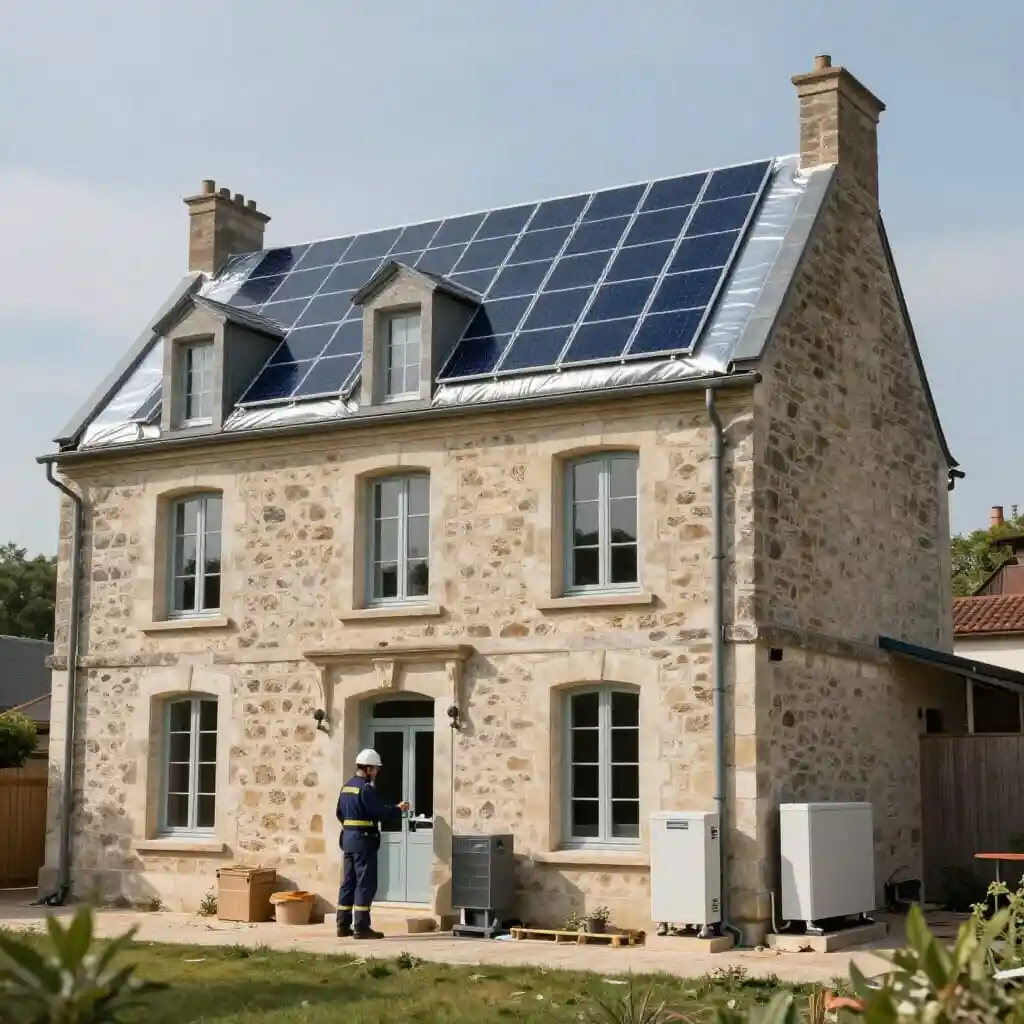 →
Energy Renovation for Old Houses: Where to Start?
A complete guide to starting your old house energy renovation. From energy audits to electrical safety and insulation, learn the key steps to prioritize.
Lire l'article →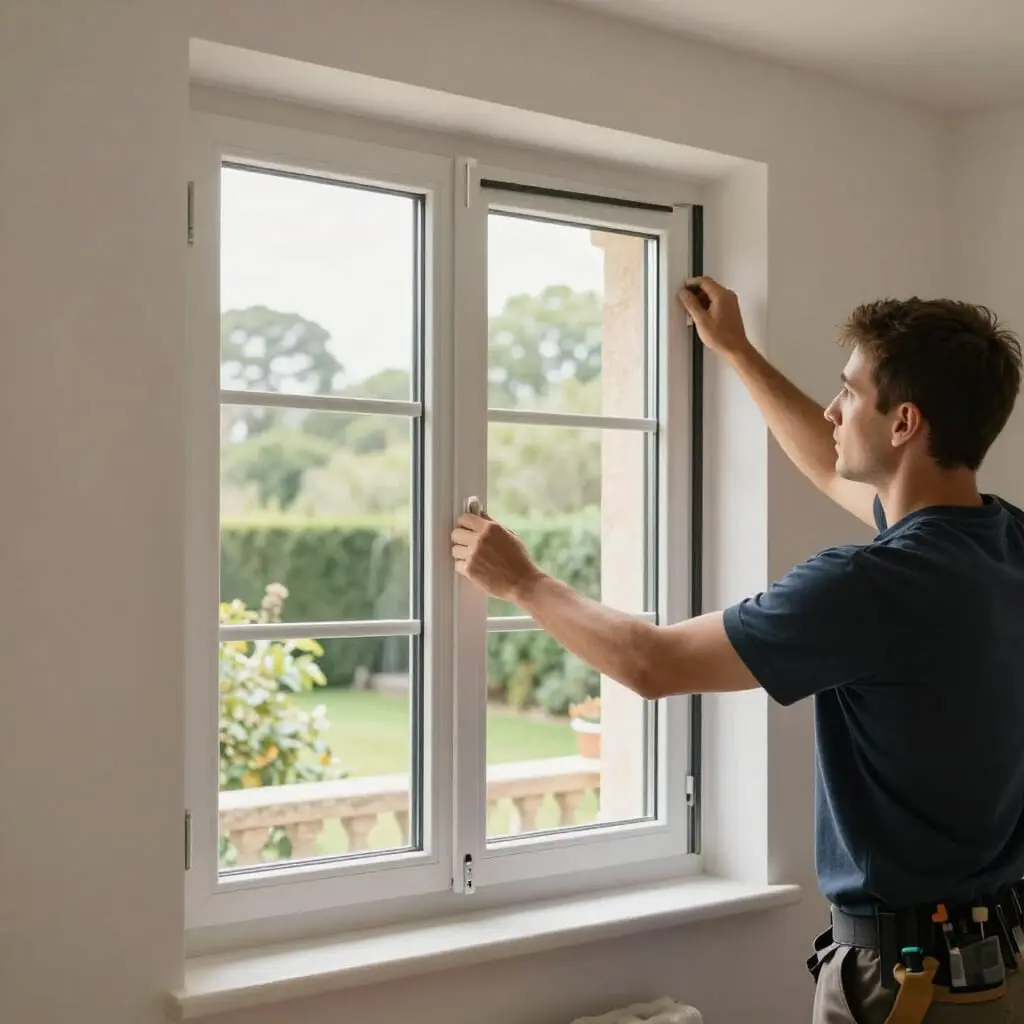 →
Window Replacement: Is It Worth the Investment in 2026?
Is replacing your windows worth it? Discover costs, energy savings, 2026 government subsidies, and the real ROI for your home improvement project.
Lire l'article →