
How much does a smart home installation cost? 2026 Pricing & Budget
- The cost of a smart home installation ranges from €200 for an initial connected device to €20,000 or more for a fully automated home.
- In a new build, the smart home budget typically represents 4% to 10% of the total construction cost, with wiring integrated during the structural phase.
- For an existing home, rely on wireless solutions (Zigbee, Z-Wave, Wi-Fi) to minimize construction work and keep budgets between €2,000 and €15,000.
- The cost per m² for a complete installation fluctuates between €90 and €200, including hardware and labor.
- Starting small (thermostat, lighting) and expanding gradually remains the most economical and lowest-risk strategy.
How much does a smart home installation cost? The answer depends primarily on one factor: are you building a new house or upgrading an existing one? In a new build, a wired system integrated during the structural phase costs between €1,500 for basic equipment and €20,000 for a fully connected home, representing 4% to 10% of the construction budget. In an existing home, wireless solutions allow you to start with as little as €200 and scale up to €15,000 or more, depending on the ambition of your project. Between these two extremes, the budget depends on the number of rooms equipped, the chosen protocol, and the desired level of automation—ranging from simple lighting control to full management of heating, shutters, and security.
Main price ranges in 2026
There is no single price for a smart home installation; instead, there are several tiers based on the scale of your project. For a starter setup, expect to spend between €200 and €500: a few smart plugs, one or two controllable bulbs, and a smart thermostat are enough to experience the comfort of a connected home without a heavy investment. This is often the recommended entry point for middle-class households looking to test the technology before scaling up.
For a mid-range installation covering lighting, motorized shutters, and partial security (cameras, sensors), the budget rises to between €3,000 and €10,000, including installation. This is the most common range for a medium-sized home equipped progressively over one or two years.
Finally, for a fully automated smart home—including room-by-room heating, scenario-based lighting, shutters, alarms, irrigation, and centralized voice control—the price climbs between €10,000 and €30,000, especially when using a wired protocol like KNX, which requires dedicated cabling. When calculated by surface area, the average cost is between €90 and €200 per square meter for a complete installation, including hardware and labor. These variations are driven less by the brand of equipment and more by the level of integration required: a standalone smart thermostat and a system controlling 40 different points throughout the house obviously carry very different costs.
Smart home installation cost for new builds: a separate budget
The question of smart home installation costs for new builds deserves a distinct look, as the context changes everything. During construction, the automation specialist works alongside the electrician during the structural phase. Low-voltage cables are run through the walls before the drywall is installed, which avoids any future drilling and allows for wired protocols like KNX, which is renowned for being more reliable and long-lasting than wireless options.
In practical terms, the budget varies from €1,500 for basic equipment (controllable lighting and shutters) to €20,000 for a fully connected home, representing 4% to 10% of the total construction cost. This ratio is possible because labor costs are shared with other trades already on-site, reducing the cost per control point compared to a renovation.
The main advantage of a new build is as much financial as it is technical: integrating smart technology during the design phase is structurally cheaper than adding it later, while providing a more robust wired infrastructure for the long term. This is why many builders now offer smart home packages as an option, which should be priced during the initial quote rather than as a construction change order, avoiding budget surprises during the build.
Smart home installation cost for existing homes: betting on wireless
In a home that is already occupied, opening up walls to run cables is neither realistic nor desirable for most households. This is why almost all renovation installations rely on wireless protocols: Zigbee, Z-Wave, Wi-Fi, and increasingly Matter and Thread, which allow for growing interoperability between brands.
The cost of a smart home installation in a renovation starts at around €200 for a beginner kit (hub, a few smart plugs, and a bulb) and can reach €15,000 for a home fully equipped with lighting, shutters, heating, and security. The most common range for a family home lies between €3,000 and €10,000, spread across several items installed progressively.
The advantage of wireless is twofold: it avoids heavy construction work and allows you to spread the investment over time, room by room or use by use. The downside is a higher dependency on batteries, signal range, and, sometimes, a proprietary ecosystem that limits the addition of devices from other brands. Before diving in, it is wise to check the Matter compatibility of the equipment you plan to buy; this recent standard makes it much easier to evolve your system without having to rebuild everything if you switch brands.
Cost per equipment category
Breaking down the budget by category helps you target your priorities more effectively. Smart lighting is often the first area to be equipped: smart bulbs, switches, and dimmers cost between €20 and €80 per light point, including installation if an electrician is involved.
Motorized smart shutters and blinds represent a heavier investment, generally between €300 and €700 per window depending on size and protocol, including the motor and installation. This is often the most significant line item in the total budget for a house with many openings.
Smart heating (smart thermostats, smart radiator valves on each unit) costs between €150 and €1,000 depending on the number of controlled zones, offering a quick return on investment through energy savings achieved via room-by-room regulation.
Security (alarms, cameras, door/window sensors) varies greatly depending on the level of protection required, from €300 for a basic kit to several thousand euros for a system with professional monitoring. Finally, the central smart home hub, the “brain” of the system that coordinates all devices, costs between €100 and €500 depending on its features and the number of controllable devices.
Smart home hubs and protocols: a direct impact on your budget
The choice of protocol is not just a technical question: it directly influences the final cost of the project. KNX, the professional wired standard, offers the best reliability and the best resale value for your property, but it requires a higher budget and dedicated cabling, making it suitable primarily for new builds or major renovations.
Zigbee and Z-Wave, low-power wireless protocols, dominate the renovation market thanks to their moderate entry cost and simple installation that requires no structural changes. Wi-Fi is very common among consumer smart devices and is attractive for its simplicity, but it can saturate your home network if too many devices are connected simultaneously.
The Matter standard, backed by the industry’s major players, is gaining ground since its launch: it allows you to mix devices from different brands on the same installation, reducing the risk of having to replace everything if you change your ecosystem. For middle-class users investing progressively over several years, prioritizing Matter or Zigbee-compatible equipment limits the risk of redundant spending caused by a change in standards mid-way through.
Hiring a professional vs. DIY installation
DIY installation can significantly reduce your bill: a simple wireless starter kit can be set up in a few hours without specialized skills, which explains the success of entry-level budgets between €200 and €500. This option is perfect for equipping a single room or testing a specific use case before expanding the system.
As soon as the project involves electrical work (wiring, circuit boards, motorized shutters) or aims for a complete, coordinated installation, hiring a smart home specialist or a qualified electrician is recommended, if not necessary, to comply with current standards. Professional labor generally represents between 30% and 50% of the total budget depending on the complexity of the job, but it guarantees a reliable configuration, customized scenarios, and long-term compatibility between devices.
A serious quote should specify the hub being used (Jeedom, Home Assistant, Somfy TaHoma, Legrand Mosaic…), the dominant protocol, the exact number of controlled devices, and the automation scenarios provided. A vague quote that simply says “smart home installation: €9,500” without these details makes it impossible to compare offers or know if you will be locked into a proprietary ecosystem that is difficult to upgrade later.
Concrete budget examples based on your profile
To give you a concrete idea of the smart home installation cost according to your situation, three typical profiles emerge. A household discovering smart technology invests between €200 and €500 in a smart thermostat, a few plugs, and an entry-level hub, with no professional intervention.
A household equipping a medium-sized existing home (80 to 120 m²) with lighting, shutters in several rooms, and a basic security system typically spends between €3,000 and €10,000, with partial professional help for motorizing shutters and system configuration.
A household building a new home with integrated smart features budgets between €5,000 and €20,000 for a wired system covering the entire house, integrated during construction with the electrician. In all three cases, the logic remains the same: start with a concrete and high-priority use (comfort, energy savings, or security), then expand the system in stages rather than aiming for a maximum installation right away, which risks exceeding the household’s actual needs.
Financial aid and return on investment
Certain smart home devices related to energy performance may qualify for financial incentives, especially when installed as part of a global energy renovation that includes a high-performance heating regulation system. You should check eligibility on a case-by-case basis with the local programs available at the time of your project, as these incentives change regularly.
Beyond subsidies, the profitability of smart home technology lies mainly in the savings generated on utility bills: a smart thermostat with room-by-room regulation reduces overconsumption caused by heating unoccupied rooms, while scheduling lighting and shutters limits energy waste outside of occupancy hours. While these savings might not immediately offset the initial investment, they contribute to a return on investment spread over several years, particularly for heating and lighting, which are the heaviest parts of an energy bill.
Mistakes to avoid to keep your budget under control
The first mistake is trying to equip everything at once without prioritizing uses: it is better to identify a concrete need (thermal comfort, security, savings) and start there before expanding the system. The second mistake is choosing a closed ecosystem without checking its future compatibility with Matter or other brands, risking having to replace everything if your project evolves.
The third mistake, common in renovations, is underestimating the cost of motorized shutters—this is often the most expensive item in the overall budget, even though it is rarely highlighted in initial quotes. Finally, accepting an imprecise quote that does not detail the protocol, the hub, or the exact number of control points exposes you to budget overruns during the project: demanding a detailed, itemized quote remains your best protection against unpleasant surprises.
What is the average cost of a smart home installation?
The average price is between €3,000 and €10,000 for a home equipped with multiple features (lighting, shutters, security), with extremes ranging from €200 for a starter kit to €20,000 or more for a full-scale installation.
What is the budget difference between a new build and an existing home?
In a new build, wired cabling integrated during construction costs 4% to 10% of the construction budget and benefits from shared labor costs with other trades. In an existing home, wireless solutions avoid heavy construction but generally offer less integration and often a higher cost per control point.
How much does a smart home installation cost per square meter?
The average budget is between €90 and €200 per square meter for a complete installation, including hardware and labor, depending on the desired level of automation.
Can I install smart home technology myself to reduce the budget?
Yes, for simple wireless devices (plugs, bulbs, thermostats), starting from around €200. As soon as the project involves electrical work or aims for a fully coordinated installation, professional assistance is recommended.
Which smart home protocol should I choose to control my budget?
Zigbee and Z-Wave offer the best cost-to-simplicity ratio for renovations. KNX, while more expensive, is best justified in new constructions for its wired reliability. Prioritizing Matter compatibility limits the risk of having to replace everything if you change ecosystems.
Which item is the most expensive in a smart home installation?
The motorization and connection of roller shutters is often the largest budget item, ranging from €300 to €700 per window, followed by smart heating and security.
Is smart home technology profitable in the long term?
It generates savings on heating and lighting through more precise regulation, but the return on investment is usually spread over several years rather than being immediate.
Are there any subsidies to help finance a smart home installation?
Some equipment related to heating regulation may be eligible for aid as part of a comprehensive energy renovation; eligibility should be verified on a case-by-case basis according to the programs in effect at the time of the project.
Sources
- New Build Smart Home 2026: Costs and Installation
- Smart Home Prices 2026: Complete Quotes and Rates
- Smart Home Prices | Average Cost & Installation Rates
- Smart Home Prices 2026: Complete Budget Guide
- What is the average budget per m² for a complete smart home installation
- Smart home specialist quote: complete 2026 guide

D'autres conseils Electrical Systems & Smart Home
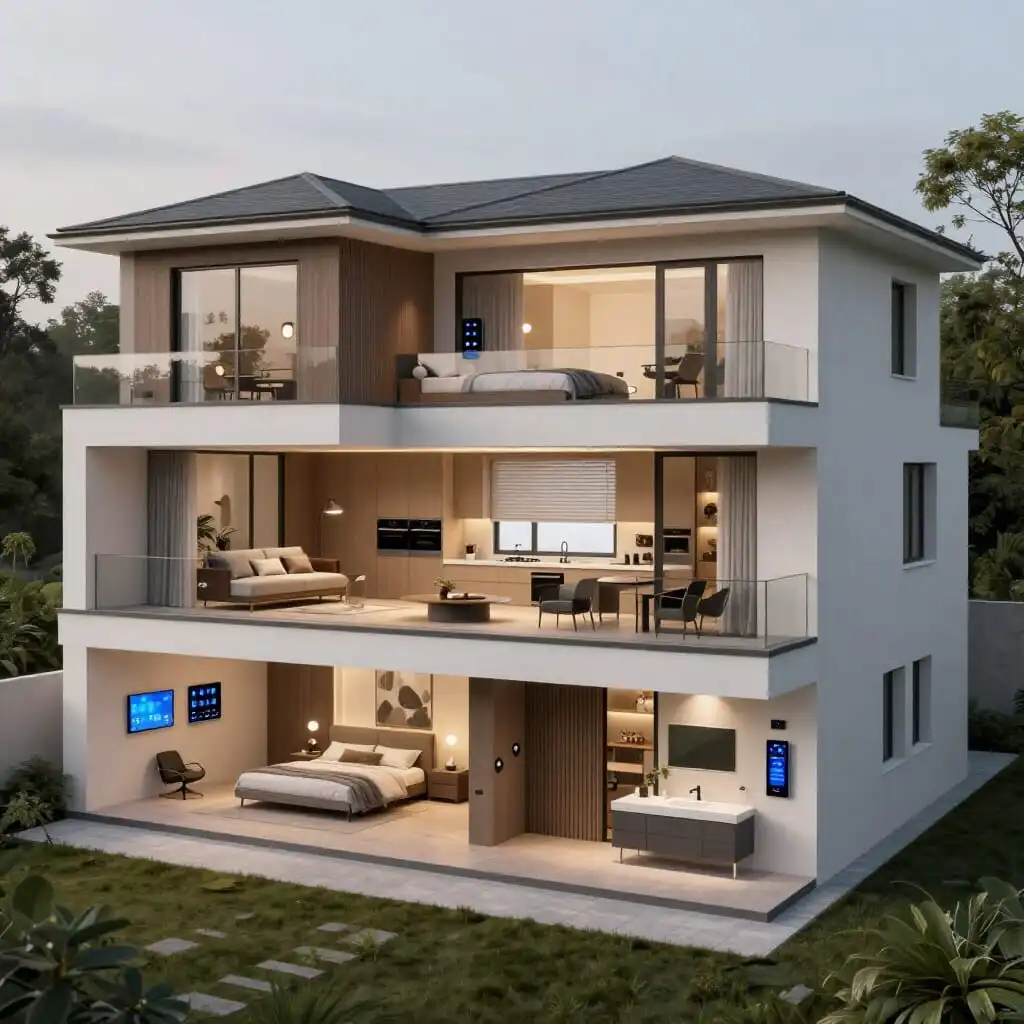 →
Smart Home Room by Room: A Step-by-Step Guide
Learn how to build your smart home room by room. A practical guide to home automation that fits your budget and simplifies your setup.
Lire l'article → →
Old electrical systems: signs of a faulty installation
Learn the warning signs of an old electrical system: ungrounded outlets, burning plastic smells, and tripping breakers. When should you renovate?
Lire l'article →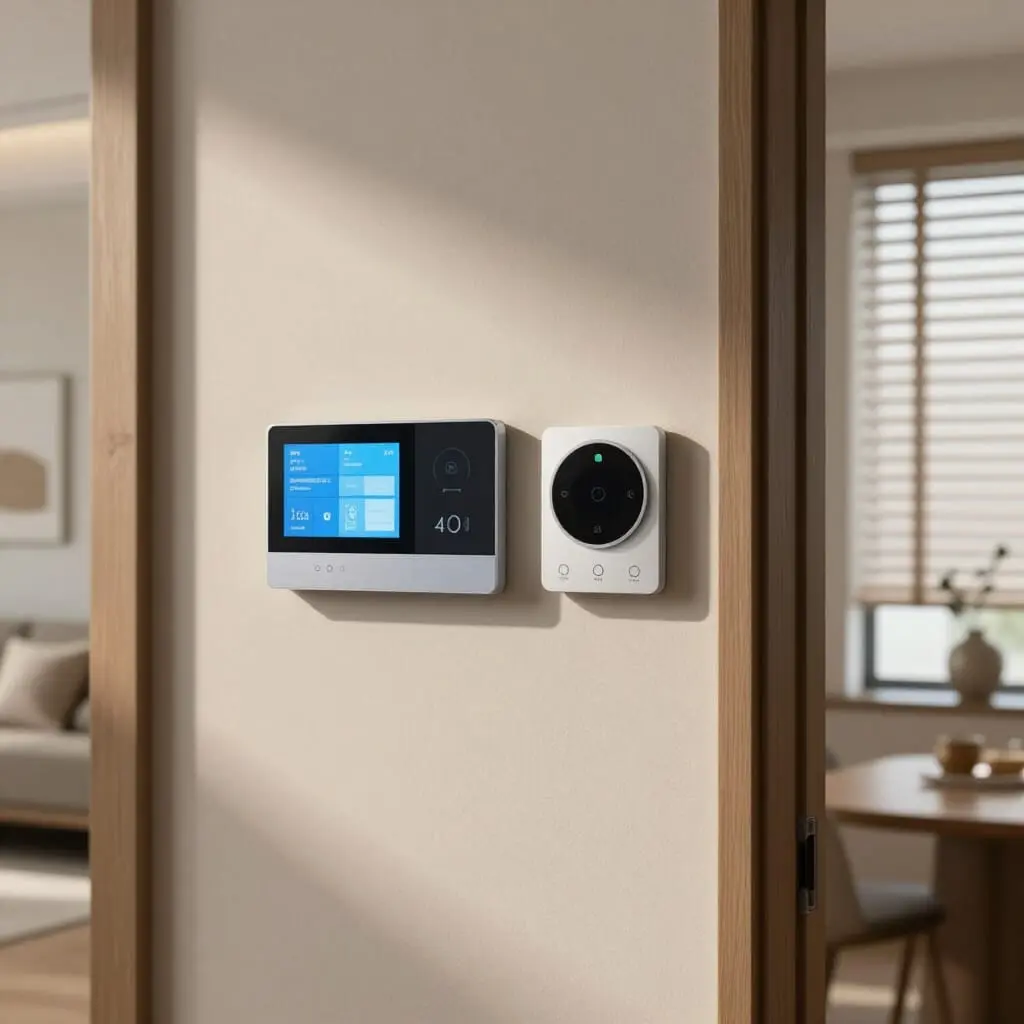 →
Smart Home Installation Cost: 2026 Price Guide & Budget
Planning a smart home? Discover installation costs from €200 to €20,000 for new builds or existing homes. Our complete 2026 guide covers everything.
Lire l'article → →
Smart Home Security: The Complete Guide
Learn how to secure your home with smart technology. From cameras to smart locks, discover all the essential devices for a safer connected home.
Lire l'article →