

How to Estimate a Renovation Budget? 2026 Methods and Benchmarks
- Price per m² varies significantly depending on the renovation level: light refresh, medium renovation, or heavy structural renovation.
- A reliable estimate is built item by item (structural, second fix, finishing) rather than using a single lump sum.
- Online simulators provide a useful initial range before you request professional quotes.
- Planning for a contingency buffer of at least 10% to 15% of the total budget helps prevent unpleasant surprises.
- Comparing multiple quotes is the only way to validate an estimate before signing a contract.
Estimating your renovation budget before diving in helps you avoid discovering halfway through the project that your funds only cover a fraction of the work. For a house, a light renovation (paint, flooring, minor finishing) generally ranges between $200 and $600 per square meter; a medium renovation (kitchen, bathroom, electrical) between $600 and $1,200/m²; and a heavy renovation involving structural work, insulation, or roofing can exceed $1,500 to $2,000/m². For an apartment, the amounts are similar but often pushed higher due to HOA regulations and access constraints. These ranges are not a substitute for precise pricing: they serve as a starting point before applying the item-by-item method described later in this guide.
Why a precise estimate changes everything
Starting a renovation without a detailed budget is like navigating without instruments. An estimate plays three distinct roles that are worth distinguishing from the start.
First, it serves as a negotiation tool when purchasing a property that needs work: knowing the real cost of repairs allows you to negotiate the purchase price based on facts, rather than discovering after signing that the roof or electrical system needs a complete overhaul. Second, it dictates your borrowing capacity: banks typically require a documented breakdown of work costs before granting a renovation loan or including the amount in a total mortgage. Finally, it sets a decision-making framework during the project: without a reference budget, every choice (high-end vs. standard materials, contractor A vs. B) is made blindly, and costs can spiral without you realizing it until the final invoice arrives.
A well-structured budget also distinguishes comfort from technical necessity. Replacing outdated plumbing or non-compliant electrical wiring is non-negotiable for safety reasons, whereas choosing premium tiles over a standard model is a matter of taste and budget. Separating these two categories during the estimation phase prevents you from sacrificing essential technical work to finance high-end finishes, or conversely, under-budgeting a renovation that turns out to be heavier than expected once the walls are opened.
Factors that influence renovation costs
The price per m² of a renovation depends on several interacting variables, which explains why two projects of the same size can have very different budgets.
Size and layout play a direct role: the larger the area, the lower the cost per m² tends to be due to the pooling of certain costs (contractor travel, equipment rental), unless the layout requires multiple partitions or levels that complicate access.
The chosen level of finish carries significant weight. The gap between entry-level, standard, and premium ranges can represent double or even triple the budget for a single item, such as a kitchen or a bathroom.
The initial condition of the property determines whether the renovation is purely aesthetic or structural. An older home may hide obsolete electrical networks, a lack of insulation, or a roof structure that needs treatment—invisible costs that heavily impact the budget once a diagnostic is performed.
Geographic location also influences labor rates, which are typically higher in major metropolitan areas than in rural zones. Finally, hiring certified energy-efficiency contractors for insulation or heating work might increase the hourly rate, but it is often required to access certain financial incentives, which can ultimately reduce your final out-of-pocket cost.
Calculating your home renovation budget item by item
The most reliable method for estimating a home renovation budget is to break the project down item by item rather than thinking in terms of a single global amount.
Start by listing the major categories of work: structural work (foundations, load-bearing walls, roofing), second fix (electrical, plumbing, insulation, joinery), and finishing (paint, flooring, kitchen, bathroom). For each item, apply a price range per m² or per unit based on comparable quotes, then add them up before adding your contingency buffer.
This breakdown also helps identify the heaviest costs: kitchens and bathrooms often represent the highest individual investments, while insulation and heating are structural components for long-term comfort and property value. By prioritizing items this way, you can make informed decisions if you go over budget—for example, by pushing certain finishes to a second phase rather than cutting back on essential technical work.
Even a simple tracking sheet helps you visualize budget progress in real time: planned amount, committed amount, and variance. This tracking becomes invaluable once the work begins, as it is often the accumulation of many small overruns per item, rather than one large error, that causes a home renovation budget to spiral.
Estimating apartment renovation costs: what changes?
Estimating the cost of an apartment renovation follows the same logic as a house, but with specific constraints that directly impact the budget.
Site access is the primary differentiator: an apartment on a high floor without an elevator increases the cost of transporting materials and removing debris—a surcharge rarely anticipated in initial estimates. HOA or building regulations can also impose additional constraints, such as restricted working hours or the requirement to have certain changes (like opening a load-bearing wall or modifying a visible facade) approved by a general meeting, which can extend timelines and increase total costs.
Shared networks (water columns, electrical conduits, collective ventilation) also limit your freedom of intervention: an apartment bathroom renovation must often work around the existing location of inlets and outlets to avoid expensive repairs to common areas.
For the same surface area, an apartment renovation frequently shows a cost per m² that is close to, or even slightly higher than, a house for second-fix items due to these logistical and regulatory constraints. On the other hand, the absence of a roof or foundation to treat generally lightens the structural work category compared to renovating an old house.
Using a simulator for an initial estimate
An online renovation budget simulator is a good starting point to get a quick order of magnitude before engaging in the longer process of requesting professional quotes.
These tools generally work by asking for the surface area, the property type (house or apartment), the desired work categories, and the target level of finish. In a few minutes, they return a low and high range, sometimes detailed item by item, which serves as a basis for sizing the project before moving forward.
The main advantage of a renovation cost simulation is speed: it allows you to test several scenarios (full renovation vs. partial renovation, standard vs. premium range) without waiting for a contractor to visit. It is also a useful tool before a real estate purchase to ensure a project remains compatible with your total available budget.
However, it is equally important to remember its limits: a simulator applies national or regional averages that do not account for the specificities of a particular property (actual state of networks, accessibility, architectural constraints). A simulation for home construction or renovation should therefore be considered an intermediate step, to be refined through a technical visit and detailed quotes from industry professionals.
The contingency buffer: a line item in its own right
In any home or apartment renovation budget, the contingency buffer should never be considered optional: it is a distinct expense item, just like plumbing or painting.
This buffer covers two distinct types of situations. First, technical discoveries during construction: once walls are opened or floors are cleared, it is not uncommon to discover a weakened roof structure, non-compliant electrical wiring, or hidden moisture that requires intervention not included in the initial quote. Second, project adjustments decided mid-way, such as when the owner changes a finish or adds a new task after seeing the progress of the work.
In practice, a margin of 10% to 15% of the total budget is a reasonable minimum for a medium renovation; this percentage can rise to 20% for a heavy renovation involving the structure of an older building, where technical uncertainty is higher before the walls are opened.
This margin must be budgeted from the start, not added as an afterthought if the need arises. This is the difference between a project that smoothly absorbs an unexpected cost and a job site that halts due to lack of funds—a situation that often generates additional costs related to stopping and restarting work.
Financing your renovation budget
Once the amount is estimated, you need to identify the available financing levers to cover all or part of the work budget.
A standard renovation loan from a bank remains the most common solution for large-scale renovations, with terms depending on your remaining balance after any potential grants. For work related to energy performance (insulation, heating, ventilation), several public grants may exist and can significantly reduce the amount to be financed, provided you use certified energy-efficient contractors and meet the technical criteria for each program.
Some energy-improvement works also benefit from reduced tax rates or rebates compared to standard rates, an advantage to include in your net budget calculation, as it directly affects the final amount to be financed.
Before seeking financing, it is useful to check your eligibility for these grants and simulate their amount, as criteria evolve regularly and vary based on location, household income, and the exact nature of the work. Integrating these incentives during the estimation phase, rather than after setting a final budget, often allows you to consider a higher level of finish for the same total cost.
The most frequent errors in budget estimation
Certain errors appear systematically in renovation budgets that spiral out of control; identifying them early allows you to avoid them.
The first is relying on a single quote or a single online estimate without cross-referencing it with other sources. Price gaps between contractors for the same service can be considerable, and an isolated estimate gives a false impression of precision.
The second common error is forgetting ancillary costs: debris removal, equipment rental, temporary accommodation if the home becomes uninhabitable during works, or administrative fees for grant applications. While individually modest, these items represent a non-negligible part of the total budget once combined.
The third error is underestimating labor costs in favor of materials: in a renovation, labor frequently represents half, or even more, of the total cost of a work item, especially for technical interventions like electrical or plumbing work.
Finally, many project owners do not budget for the contingency buffer mentioned above, or they significantly undersize it, which turns even the slightest site mishap into a financial crisis. Anticipating these four pitfalls during the estimation phase prevents the majority of the overruns seen at the end of a project.
Moving from estimation to professional quotes
No matter how careful an estimate is, it can never replace a priced quote from a professional: it serves to prepare for that stage under the right conditions.
Once the provisional budget is established item by item, the next step is to request multiple quotes for each trade involved—generally three per item to provide a sufficient basis for comparison. Presenting contractors with an already structured estimate, with clearly identified items and the desired level of finish, allows you to obtain more precise quotes that are easier to compare.
When comparing, the goal is not systematically to choose the cheapest quote, but to verify that each proposal covers the same scope of work: a large price gap is sometimes explained by a less complete service or different quality materials that are not obvious when simply reading the total amount. Requesting a detailed item-by-item breakdown for each quote, rather than a global flat fee, makes this comparison much easier.
Finally, keeping a written record of every estimate and every quote received provides security in case of future disputes regarding whether the work performed matches what was initially priced.
How can I calculate a home renovation budget quickly?
Multiply the surface area by a price per m² corresponding to your target renovation level (light, medium, or heavy), then add a contingency buffer of 10% to 15%. This quick calculation provides an initial range to be refined item by item later.
What is the average price per m² for a full renovation?
For a heavy renovation affecting the structure, insulation, and all utility networks, the price per m² frequently exceeds $1,200 to $1,500 and can reach $2,000/m² depending on the property’s initial condition and the chosen level of finish.
How do I estimate the cost of an apartment renovation?
Use the same item-by-item method as for a house, while including costs specific to apartments: site access, HOA constraints, and connections to shared networks, which often increase the cost of second-fix items.
Is a home renovation simulator reliable?
A simulator provides a useful indicative range to help size a project, but it uses averages that do not account for the actual condition of your property. It must be supplemented by a technical visit and professional quotes.
How much should I set aside for contingencies in a renovation budget?
Plan for at least 10% to 15% of the total budget for a medium renovation, and up to 20% for a heavy renovation involving structural work or an older building.
How can I finance my renovation budget?
A standard renovation loan is the most common solution, which can be supplemented by public grants for energy performance and tax rebates on certain items, provided you use certified energy-efficient contractors.
Should I estimate my renovation budget before buying a property?
Yes: this estimate allows you to negotiate the purchase price with full knowledge, verify your total borrowing capacity, and avoid discovering a renovation cost that is incompatible with your available budget after signing.
What is the difference between a home construction simulation and a renovation simulation?
A construction simulation starts with a new building without existing constraints, while a renovation simulation must account for the current state of the structure, potential discoveries during construction, and access constraints, making the initial estimate inherently less precise.
Sources
- Chantiers Facile — Renovation Budget
- RénoEstim — Work estimation and price per m² guide
- Architecteo — House renovation price per m²
- Bricotest — Average house renovation price
- Maison en Travaux — Budget and house renovation prices

D'autres conseils Real Estate & Construction
 →
Track Construction Progress: Effective Methods & Tools
Learn how to effectively track construction progress with simple indicators, practical tools, and proven methods to stay on schedule and budget.
Lire l'article →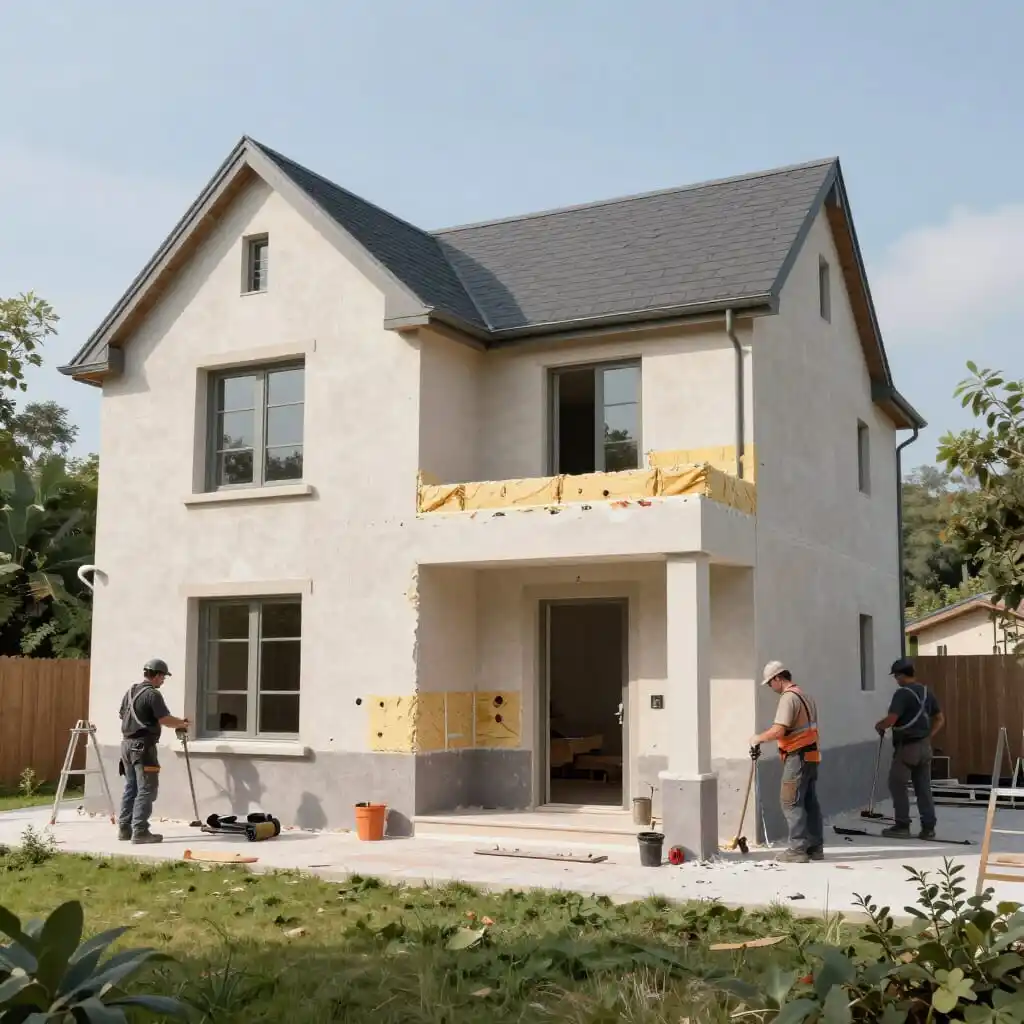 →
Home Construction Order: The Complete Chronological Guide
Find the ideal order for your home construction or renovation projects. A complete guide to structure, utilities, insulation, and finishing works.
Lire l'article →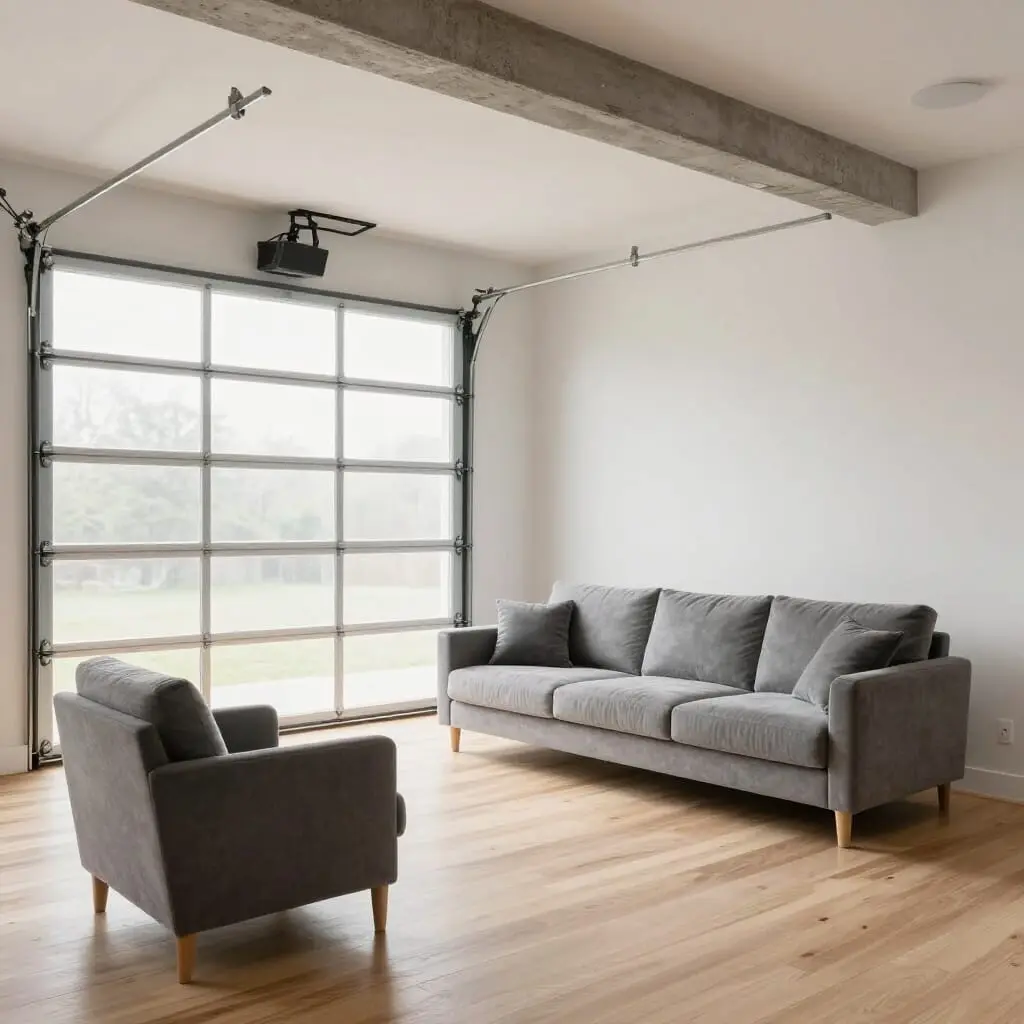 →
Garage Conversion Guide: Process, Budget & Requirements
Complete guide to converting your garage into a living space: administrative steps, detailed budget (€500-1,200/m²), and essential renovation work.
Lire l'article →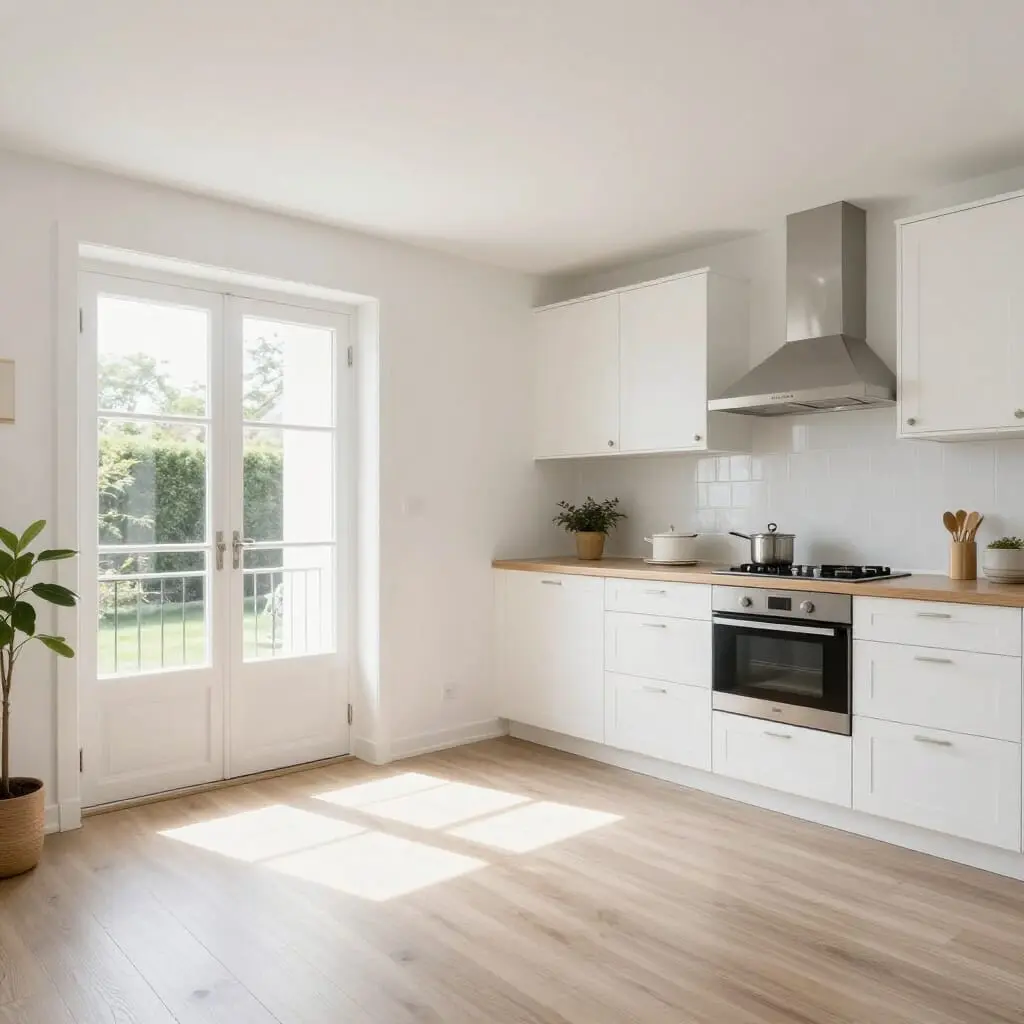 →
How to Prepare Your Home for Sale | Complete Guide
Learn how to prepare your home for sale: essential inspections, repairs, home staging tips, and expert advice to attract more buyers and maximize your…
Lire l'article →