
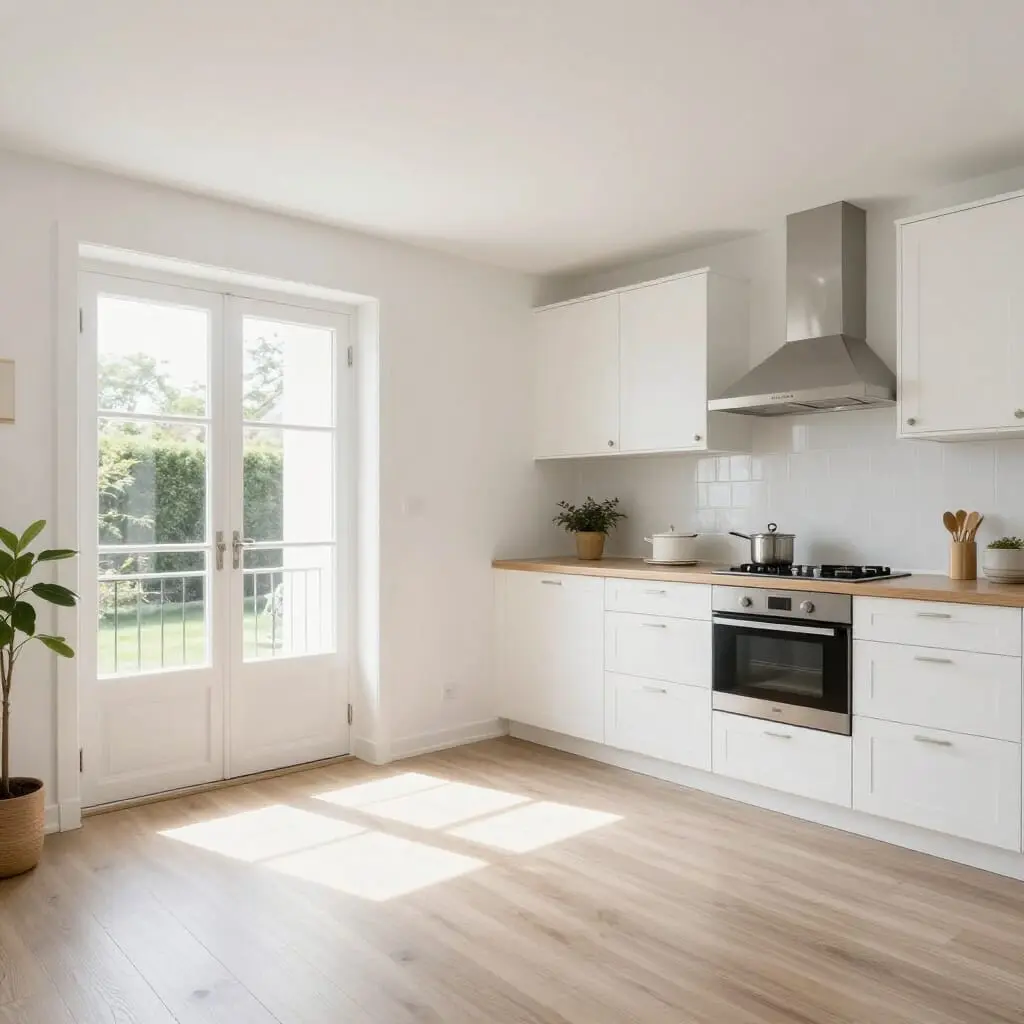
How to Prepare Your House Before Selling? A Step-by-Step Guide
- Mandatory inspections (energy audits, asbestos, lead, electrical, etc.) must be compiled into a file before the first viewing.
- Decluttering and depersonalizing every room remains the most cost-effective way to help buyers envision themselves living there.
- Visible small repairs (paint, caulking, handles, lighting) often carry more weight in a buying decision than major renovations.
- Targeted home staging in the entryway, living room, and kitchen costs little and limits the risk of price negotiations.
- Curb appeal, lighting, and scents are the three details sellers most often underestimate during viewings.
Preparing a house for sale involves a four-step process: gathering mandatory inspection reports, decluttering and depersonalizing every room, fixing small visible defects, and finally, staging the interior and exterior for viewings. A poorly prepared property is noticed within seconds—clutter, peeling paint, odors, or poor lighting—and prompts buyers to either negotiate heavily or walk away. Conversely, a tidy, repaired, and well-presented home gives the impression of a well-maintained property, which reassures buyers about its general condition and reduces grounds for negotiation. This guide details, step by step, what needs to be done before listing, in what order, and with what level of budget.
Why preparation directly impacts the outcome of the sale
A buyer visiting a house forms a first impression in less than a minute, often before even stepping into the living room. This impression dictates the rest of the visit: a property perceived as a “fixer-upper” mechanically forces the buyer to evaluate repair costs, leading to lower offers, whereas a property perceived as “move-in ready” focuses their attention on the home’s qualities—space, light, and layout.
Preparation works through two distinct levers. First is the time on market: a property that sits on the market for several months often ends up selling for less, because its prolonged presence in listings is interpreted by buyers as a negative signal (“there must be a problem”). Second is the seller’s net proceeds: every visible flaw (faded paint, outdated fixtures, an overgrown garden) becomes a negotiation point, often priced well above the actual cost of the repair.
In practical terms, this means that a limited budget dedicated to targeted repairs and organization generally yields a higher return than a major renovation undertaken just before the sale. The goal is not to transform the house, but to remove anything that, in the eyes of a hurried visitor, looks like a problem to be solved after the purchase. This logic structures all the steps detailed below.
Gather mandatory real estate diagnostics first
Before even thinking about decor, you must secure the regulatory side. Laws require you to provide the buyer with a technical inspection report (DDT), which includes several mandatory documents depending on the property’s characteristics: an Energy Performance Certificate (EPC), lead exposure risk assessments for homes built before 1949, asbestos reports for building permits issued before July 1997, natural and technological risk reports, termite inspections in affected areas, as well as gas and electricity diagnostics if the installations are more than fifteen years old. Depending on the property, this file can comprise up to a dozen distinct documents.
These diagnostics must be carried out by a certified professional and attached to the sales agreement. Having them completed in advance, before the listing goes live, offers two advantages: it prevents discovering a major issue (asbestos, non-compliant electrical wiring) at the critical moment of an offer, and it allows you to display the energy rating immediately in your advertisement, which is mandatory and immediately reassures buyers regarding future utility costs.
A poor energy rating doesn’t prevent a sale, but it is better to anticipate it: if small insulation improvements or heating equipment upgrades can significantly improve the energy class at a low cost, it is worth evaluating before listing rather than facing a negotiation based on a future energy audit. Conversely, undertaking heavy energy renovation solely for the sake of a sale is rarely profitable: it is often better to adjust the price accordingly and be transparent about it in the listing.
Decluttering and depersonalizing: the foundation of all preparation
Decluttering is the most profitable step in the entire process because it costs almost nothing and directly affects the perception of space. A cluttered room looks smaller than it actually is, and a buyer needs to be able to visualize their own furniture in the home—which becomes impossible if the space is saturated with personal belongings.
In practice, this means emptying at least a third of closets and visible storage, removing redundant furniture (extra chairs, unnecessary coffee tables, cluttered shelving), and clearing kitchen and bathroom countertops. A temporary storage unit or even a rented storage box for a few weeks is often a worthwhile investment if the home contains a lot of furniture.
Depersonalizing goes a step further: it involves removing family photos, highly personal items, unique collections, and overly distinctive decor (bright colors, very specific themes). The goal is not to make the house feel cold, but neutral—a buyer must be able to imagine living there with their own life, not the current seller’s. This also applies to highly themed children’s rooms or offices converted into atypical living spaces: returning a clear function (bedroom, office, dining room) to each room helps visitors project themselves into the space, whereas a room with a vague purpose generates hesitation.
This work generally takes one to two weekends depending on the size of the home, and should be done before the first photos are taken, not after the first disappointing viewings.
Small repairs: where to focus your budget
Contrary to popular belief, it is almost never major renovations that derail a negotiation, but rather the accumulation of small, visible defects that create a general impression of neglect. A loose door handle, blackened bathroom caulking, a non-functional electrical outlet, or a crack in the paint are all details that buyers notice immediately and interpret—often incorrectly—as a sign of insufficient overall maintenance.
The priorities to address before any viewing are generally the same: touch up peeling or overly marked paint with neutral, light colors; redo silicone seals in the bathroom and kitchen; replace burnt-out bulbs and faulty switches; tighten or replace door and cabinet handles; and repair small visible leaks (faucets, toilets). These interventions generally cost a few hundred dollars/pounds in total for a standard home—an amount incomparable to the price drop that their absence can cause during negotiations.
For heavier work—roof, facade, complete electrical rewiring, heating—the question is different. There is no legal obligation to perform these before a sale: a seller can sell “as-is,” leaving the buyer to account for these in their offer. The decision depends mostly on the local market and the target buyer. In a seller’s market, a property sold “to be renovated” finds buyers easily among those looking specifically for a discount to fund their own work. In a slower market, however, a visible structural defect can discourage a large portion of visitors even before negotiations begin, which extends the time on market. When in doubt, a local inspector or real estate agent can indicate if certain types of work are truly expected by buyers in your area.
Home staging: setting the scene without changing the soul
Home staging consists of presenting the property in a way that reveals its potential rather than the current owner’s lifestyle. Unlike decoration, which expresses personality, home staging aims for neutrality and clarity: every room should have an obvious function, optimized lighting, and a minimum of visible objects.
The rooms to prioritize are those that carry the most weight in the buying decision: the entryway, which sets the tone in the first few seconds; the living room, often the most viewed room in both photos and viewings; and the kitchen, which remains one of the most frequently cited decision criteria for buyers. In these three rooms, it is worth rearranging the furniture to clear walking paths, adding a few warm and neutral touches (cushions, throws, green plants), and taking care of accent lighting to compensate for insufficient natural light.
A DIY home staging budget remains generally modest: deep cleaning, rearranging existing furniture, a few neutral decor items, and sometimes a short-term furniture rental to furnish an empty room. Hiring a professional home stager has a higher cost, but in most cases, remains much lower than the price reduction a poorly presented property suffers during negotiation. The key is to maintain balance: too much staging, with furniture that doesn’t match any real style, can conversely create an artificial impression and arouse suspicion about what the staging is trying to hide.
Do not neglect the exterior, the entrance, and parking
The exterior sets the very first impression, well before the buyer steps through the door, yet it is one of the most often neglected aspects of sale preparation. A dirty facade, an overgrown lawn, or a poorly lit entrance immediately instills doubt, even if the interior is impeccable.
Low-cost, high-impact actions include cleaning the facade and surroundings (driveway, terrace, entryway), mowing and weeding the garden, trimming hedges that block the view of the house from the street, and tidying the garage or garden shed, which often become catch-alls for clutter over time. For a house with a garden, a few flower beds or well-maintained pots near the entrance are usually enough to create an impression of care without requiring full landscaping.
Parking deserves special attention: a clear access point, a visible and marked parking space, or simply a driveway cleared of secondary vehicles or DIY equipment facilitates the first approach to the property and prevents the visit from starting with an impression of disorder. These steps, often achievable in a single day, are among the most profitable parts of preparation since they require no significant financial investment.
Light, cleanliness, and scents: the three details that make the difference
Three elements, often neglected because they seem secondary, nonetheless heavily influence a visitor’s feeling: light, cleanliness, and scents.
Light must be maximized in every room visited: open shutters and curtains before each viewing, clean windows that filter natural light, and turn on accent lighting in dark areas, even during the day. A bright room systematically looks larger and more welcoming than an identical room left in the shadows.
Cleanliness must go beyond routine housework: bathrooms, grout, stovetops, windows, and floors must be impeccable during viewings, as these are the areas buyers inspect most closely to judge the general maintenance of the home. A simple deep clean before each viewing slot significantly changes perception, even without any other work.
Scents, finally, are a widely underestimated factor that acts almost immediately and unconsciously on the visitor. The smells of smoke, pets, or cooking can settle into textiles and are often imperceptible to the inhabitants who are used to their own environment. Systematically airing out the house before each visit, washing textiles (curtains, cushions, rugs), and avoiding overly strong air fresheners—which can conversely arouse suspicion of a smell being masked—helps eliminate this invisible but real barrier.
Organize the administrative file and anticipate viewings
The physical preparation of the property must be accompanied by administrative preparation, which is often neglected until the last minute, even though it can significantly speed up the transaction once an offer is received. This involves gathering, in advance, the title deed, the latest property tax notices, invoices for completed work with their supporting documents (materials, certificates of conformity for electricity or gas if applicable), the co-ownership rules and the latest meeting minutes for properties in a managed community, as well as the technical inspection report mentioned above.
Having this complete file ready as soon as the property is listed allows you to respond immediately to questions from serious buyers, which builds trust and avoids delays that can sometimes give a hesitant buyer time to change their mind.
Regarding viewings, a few simple principles significantly improve the conversion rate: prefer daytime slots with maximum natural light, limit the presence of pets during the visit, and avoid being present yourself to comment on every room—a buyer rarely feels free to openly discuss points of concern in the presence of the seller. Preparing answers to frequent questions in advance (HOA fees, average utility bills, age of the roof or boiler) also helps gain credibility and avoids the impression of improvisation, which can also incite negotiation.
Errors to avoid before listing
Certain mistakes are common among sellers who prepare their homes without a method. The first is over-investing in major renovations just before the sale, hoping to recoup the full cost in the sale price: in the vast majority of cases, these amounts are not reflected cent for cent, and the seller bears part of the loss.
The second error is masking a defect rather than treating it or mentioning it clearly: a hastily repainted leak, a moisture problem simply ventilated before viewings, or a crack hidden behind furniture almost always ends up being discovered, either during a professional follow-up visit or after the sale—with a risk of litigation much more costly than the initial fix.
The third error is neglecting mandatory diagnostics until the last minute, which delays the signing of the purchase agreement and can cause you to lose a motivated buyer. Finally, many sellers underestimate the impact of decluttering and cleanliness, wrongly assuming that only major works matter, when it is often the least expensive details to correct that carry the most weight in a buyer’s final decision.
How long before selling should I start preparing my house?
Generally, plan for three to six weeks for full decluttering, small repairs, and organizing the mandatory inspections. This timeframe also allows you to have the diagnostics completed by a certified professional without rushing before the listing is published.
Should I do renovations before selling a house?
No law requires you to perform renovations before a sale, except for the mandatory technical inspections. However, targeted small repairs (paint, caulking, lighting) are generally profitable, whereas major works are only justified if the local market heavily penalizes properties needing renovation.
Which diagnostics are mandatory for selling a house?
Depending on the property’s characteristics, the technical inspection report may include the energy audit (EPC), asbestos report, lead exposure assessment, natural and technological risk report, termite inspection, as well as gas and electricity diagnostics for installations older than fifteen years.
Is home staging useful for a house, not just an apartment?
Yes, home staging applies just as much to houses, with special attention to the entryway, the garden, and the garage, in addition to classic interior living spaces like the living room and kitchen.
How can I depersonalize a house without making it feel cold?
The goal is to remove highly personal items (family photos, collections, very strong decor) while keeping a few warm, neutral touches, such as plants, solid-colored cushions, or accent lighting, to maintain a lively atmosphere without a heavy personal identity.
What budget should I set aside to prepare a house before its sale?
The budget varies greatly depending on the condition of the property, but decluttering, a few small repairs, and a deep clean often represent a few hundred dollars/pounds—an amount generally much lower than the price reduction caused by a poorly prepared property during negotiation.
Should I be present during house viewings?
It is generally advised to limit your presence or delegate it to a real estate agent, so that visitors feel free to discuss the points that interest or worry them without the pressure of the seller’s presence.
Does a poor energy rating prevent a house from being sold?
No, a poor energy rating does not prevent the sale, but it must be disclosed in the listing and can influence negotiations. Small insulation or heating improvements can sometimes improve the energy class at a low cost before listing.
Sources
- Service-public.gouv.fr — Mandatory real estate diagnostics for a sale
- Notaires de France — Real estate technical inspections
- PAP.fr — Should you do renovations before selling a house or apartment?

D'autres conseils Real Estate & Construction
 →
Buying a house to renovate: 5 essential things to check
Learn the key points to check before buying a fixer-upper: structural integrity, technical reports, renovation budgets, and local zoning laws.
Lire l'article → →
How to Organize a Renovation Project: A Complete Guide
Learn how to organize your renovation project from A to Z: diagnostics, budgeting, scheduling, and site monitoring. A complete step-by-step guide.
Lire l'article → →
Home Renovation: How to Avoid Unexpected Costs & Issues
Learn how to avoid surprises during home renovations: from quotes and budgets to contracts and legal guarantees.
Lire l'article → →
Structural vs. Finishing Work: Renovation Costs & Difference
Learn the difference between structural and finishing work for your home renovation. Understand the order of tasks, costs, and essential building stages.
Lire l'article →