
Wall Insulation: Interior vs. Exterior? The Complete Comparison
- Interior Thermal Insulation (ITI) is cheaper per m² but reduces living space by 3% to 7% depending on the thickness chosen.
- Exterior Thermal Insulation (ITE) virtually eliminates thermal bridges and renovates your facade, but requires a higher budget.
- Walls represent a significant portion of heat loss in poorly insulated homes, making this a high-priority renovation task.
- Your choice depends on three main criteria: available budget, the condition of your facade, and your tolerance for losing interior floor space.
- As of 2026, exterior insulation (ITE) is no longer eligible for single-step government grants; it is now only accessible through large-scale renovation programs.
Deciding whether to insulate your walls from the inside or the outside is a common dilemma whenever an energy renovation project arises, and there is no one-size-fits-all answer. Interior Thermal Insulation (ITI) is attractive due to its lower cost and simpler installation, but it “eats into” a few square meters in every room treated. Exterior Thermal Insulation (ITE) offers superior thermal performance and refreshes the building’s facade, albeit at a significantly higher cost and subject to local planning regulations. This comparison details the strengths and weaknesses of each technique, their actual costs per m², and the practical criteria that should guide your decision based on your home.
ITI vs. ITE: Two Radically Different Approaches
Before comparing the pros and cons, it is essential to understand the fundamental difference between these two methods. Interior Thermal Insulation (ITI) involves attaching an insulator—such as mineral wool, wood fiber panels, polystyrene, or cellulose wadding—to the inner face of the walls, usually finished with plasterboard. This is the traditional method, widely used in renovations for decades, because it utilizes general contractors and accessible materials.
Exterior Thermal Insulation (ITE), on the other hand, wraps the building in an insulating “blanket” applied to the facade, either under render or cladding. This principle changes everything: the structural wall remains inside the heated envelope, allowing it to fully utilize its thermal inertia. This means the wall stores heat during the day and releases it at night—an effect that is almost entirely lost with ITI, since the insulation cuts the wall off from the living space.
This difference in logic explains most of the discrepancies in performance, cost, and constraints between the two methods. The choice is not just about budget; it affects how the building “breathes,” how it stores heat, and how it ages over time. In certain cases—such as apartments in managed complexes, listed buildings, or semi-detached houses—the choice may already be made for you, as only one option might be legally or practically feasible.
Interior Thermal Insulation (ITI): The Practical Benefits
ITI remains the most common choice for renovations due to practical reasons. The primary advantage is cost: work typically ranges between €30 and €80 per m², depending on whether you opt for simple adhered insulation or injection into an existing air gap—a massive price difference compared to exterior methods.
Implementation is also faster and less dependent on weather conditions since the work takes place indoors. It requires no scaffolding and no special planning permission (outside of shared apartment buildings), which significantly simplifies the project launch. ITI also allows you to treat one room at a time without touching the rest of the facade—a decisive advantage for those managing a budget over time or performing a phased renovation.
Another strength: ITI does not change the exterior appearance of the building. This is often the only viable option for homes with exposed stone facades, listed buildings, or apartments where modifying the common facade requires approval from a homeowners’ association—a lengthy process that can sometimes be impossible to secure. Finally, ITI is easily paired with enhanced acoustic insulation, which is highly beneficial in urban areas or near busy streets.
Interior Thermal Insulation (ITI): Potential Drawbacks
The main drawback is the loss of living space. Depending on the thickness of the insulation installed, the reduction in floor area generally fluctuates between 3% and 7%—a figure that adds up quickly in a studio or a small one-bedroom apartment where every square meter counts. However, this should be viewed in context: a poorly insulated, cold room is often underutilized in its entirety, whereas a well-insulated wall makes the whole space truly comfortable.
ITI is also more susceptible to thermal bridges, particularly at the junctions between walls and floors, walls and ceilings, or around internal load-bearing walls. Unlike ITE, which wraps the entire building in a single continuous layer, interior insulation is interrupted by every partition and intermediate floor, creating residual heat loss zones that must be carefully managed (using thermal bridge breaks or insulation returns).
The construction process also causes significant daily disruption: moving furniture, dust, and the need to relocate electrical outlets, baseboards, and sometimes window frames. In older homes with stone or rammed earth walls, ITI requires extra vigilance: applying inappropriate insulation and vapor barriers to a “breathable” wall can trap moisture inside the structure, leading to issues like mold or the degradation of lime mortar. In these contexts, it is better to prioritize breathable insulators like wood fiber or hemp.
Exterior Thermal Insulation (ITE): The Practical Benefits
ITE is a game-changer in terms of thermal efficiency. By enveloping the facade in a continuous layer, it eliminates almost all structural thermal bridges—the gaps formed at the junctions between floors, internal walls, and load-bearing walls that are often responsible for significant heat loss in poorly insulated homes. This technique generally offers the best overall thermal performance gain, both in winter and summer, thanks to the preserved thermal inertia of the walls.
A second major advantage: there is zero loss of living space, as the insulation is installed entirely on the outside. For compact homes, this is often the deciding factor over ITI. Furthermore, the work does not require moving furniture or emptying rooms, allowing residents to stay in the home during construction.
Finally, ITE offers the opportunity to refurbish the facade as a whole: a complete facelift, crack repair, and aesthetic improvement with a wide range of finishes (render, wood cladding, or composite). It also protects the structural walls from the elements and repeated thermal shocks, limiting degradation and potentially extending the life of the facade. For an older house with walls in good structural condition, this protection—combined with the lack of space loss—makes it the preferred solution when the budget allows.
Exterior Thermal Insulation (ITE): Potential Drawbacks
The primary hurdle is the budget. Typical prices range between €120 and €280 per m² including installation, representing a sharp increase over ITI. The wide range is due to the chosen technique (render is less expensive than cladding) and the complexity of the facade being treated.
ITE systematically changes the exterior appearance of the building; therefore, it is subject to planning permission or local authority approval in protected areas. It is also impossible to undertake without the consent of a homeowners’ association in a multi-unit building. For semi-detached or terraced houses, implementation may also be limited by a lack of available space at the property boundary.
The project requires scaffolding for the full height of the building, which extends timelines and makes ITE more weather-dependent. It also involves ancillary works that are often underestimated during the quoting stage: adjusting roof overhangs, window sills, shutters, and sometimes rainwater downpipes, to ensure the insulating envelope integrates cleanly with the rest of the facade. These finishing touches represent a significant portion of the final budget and should be detailed in your quotes from the start.
Price Comparison per m²
From a strictly budgetary standpoint, the gap between the two techniques is clear. ITI generally sits between €30 and €80 per m², with simple adhered insulation at the lower end and injection or reinforced facing at the higher end. ITE typically oscillates between €120 and €280 per m² depending on the technique (render vs. cladding) and facade complexity—meaning the total budget is generally two to four times higher for an average-sized home.
This difference should not be viewed in isolation. ITE effectively includes a facade renovation, an expense a homeowner would likely have had to incur anyway in the medium term for a degrading facade—which mechanically reduces the real extra cost of the operation. Conversely, a lower ITI budget can hide interior finishing costs (painting, woodwork, electrical updates) that increase the final bill if multiple rooms are insulated successively.
Finally, the return on investment depends heavily on the initial level of heat loss in the walls and the home’s energy costs. In an old, poorly insulated house, the gain in comfort and the drop in energy bills are often felt much sooner than a simple cost-per-m² calculation might suggest.
Which Solution is Right for Your Home?
The choice is rarely absolute; it stems from the type of property and its specific constraints. For a single-family home with a facade in good structural condition and a sufficient budget, ITE is often the most high-performance solution, provided the land allows for the necessary insulation thickness at the property line. For semi-detached or terraced houses in dense urban areas, limited facade space often makes ITE impractical, naturally steering homeowners toward ITI, at least for shared walls.
In apartments, the question is usually moot: the facade is a common area, and ITE requires approval from the homeowners’ association—a long process rarely initiated by a single owner. ITI remains the only realistic option, allowing for room-by-room updates during interior renovations.
For older homes with stone, solid brick, or rammed earth walls, the priority is preserving the wall’s ability to manage moisture. Both techniques are possible, but they require breathable materials (wood fiber, hemp-lime) rather than airtight insulators and vapor barriers, which could trap moisture within the wall. Finally, for those on a tight budget or working on a phased project, ITI allows you to prioritize the coldest rooms without waiting to fund the entire facade.
Financial Aid for Wall Insulation in 2026
The landscape of financial incentives has evolved in 2026 and should be verified before launching a project. ITI continues to qualify for government energy renovation grants (subject to income requirements and the use of certified contractors), alongside energy efficiency certificates (CEE) paid by energy suppliers and zero-interest eco-loans to help finance the remaining costs.
For ITE, the system has changed: since January 1, 2026, this technique is no longer eligible for single-step energy grants. It can now only be utilized as part of a “large-scale renovation” program—a more demanding process that requires significant overall energy savings. Homeowners considering ITE as a standalone project should instead look toward energy efficiency certificates, eco-loans, and reduced VAT rates, which remain accessible regardless of the renovation type.
In both cases, it is essential to have the work performed by a certified professional (such as an RGE-certified artisan in France): this is a mandatory condition for eligibility for almost all available financial aid.
How to Decide Between ITI and ITE
Three questions can usually help you decide quickly. First, what is your available budget? If funds are limited, ITI is the most accessible solution and can be completed room by room. Second, what is your maneuverability regarding the facade? Shared buildings, listed facades, semi-detached houses, or cramped lots often relegate ITE to a theoretical rather than a practical option.
Finally, what is your tolerance for losing floor space? In a small home where every square meter counts, this argument alone can tip the scales toward exterior insulation if the budget permits. Conversely, in a large house, losing a few centimeters per room has a marginal impact on usability.
In many cases, the most relevant solution is not exclusive: treating shared walls or apartment facades from the inside, while reserving ITE for accessible, exposed exterior walls, allows you to combine both techniques based on the actual constraints of your home. Obtaining several detailed quotes—incorporating often-forgotten ancillary works (finishes, window sills, electrical updates)—remains the best way to objectively compare the final cost of each option for your home.
What is the difference between ITI and ITE?
ITI (Interior Thermal Insulation) places the insulator on the living side, behind a surface layer; ITE (Exterior Thermal Insulation) installs it on the facade, under render or cladding. The former is cheaper but reduces living space, while the latter is more efficient but more expensive.
Does interior insulation result in a large loss of living space?
The observed loss is generally between 3% and 7% of the room’s surface area, depending on the thickness of the insulation. This reduction is often offset by the gain in thermal comfort throughout the space.
Is exterior insulation always more efficient than interior insulation?
Thermally speaking, yes in the vast majority of cases, because it eliminates most structural thermal bridges and preserves the wall’s thermal inertia. However, the real difference depends on the quality of implementation for both techniques.
Can you use exterior insulation in an apartment building?
Technically yes, but it requires approval from the homeowners’ association since the facade is a common area. In practice, ITI is often the only accessible option for an individual unit owner.
What budget should I set aside for wall insulation?
ITI generally ranges from €30 to €80 per m², while ITE ranges from €120 to €280 per m², including installation. The gap is due to technical complexity and the facade work included in ITE.
Is ITE still eligible for government energy grants in 2026?
Since January 1, 2026, ITE is no longer eligible for single-step energy grants; it is now only available through large-scale renovation programs. It remains accessible via energy efficiency certificates, eco-loans, and reduced VAT.
How can I insulate an old house without causing moisture issues?
Prioritize breathable insulators (wood fiber, hemp, hemp-lime) that allow the wall to “breathe,” and avoid standard airtight vapor barriers that can trap moisture inside stone or rammed earth walls.
Can I combine ITI and ITE on the same house?
Yes, this is actually common practice: treating shared or constrained walls from the inside while reserving exterior insulation for accessible, exposed facades allows you to adapt the technique to the specific constraints of the building.
Sources
- Thermal Insulation of Walls: Interior or Exterior – Thermal Advice
- Interior or Exterior Insulation: Making the Right Choice – Hello Watt
- Wall Insulation Interior or Exterior: ITI vs ITE – Energy Grants
- Exterior or Interior Insulation: The 2026 ITE vs ITI Comparison – Selectra
- Exterior Insulation Price per m² (ITE): Complete 2026 Guide and Aid
- Insulation Cost per m² in 2026 – Work Prices per m²
- Interior Wall Insulation (ITI): Surface Loss vs. Energy Savings – Artisan Circle

D'autres conseils Energy-Efficient Renovation
 →
Window Replacement: Is It Worth the Investment in 2026?
Is replacing your windows worth it? Discover costs, energy savings, 2026 government subsidies, and the real ROI for your home improvement project.
Lire l'article →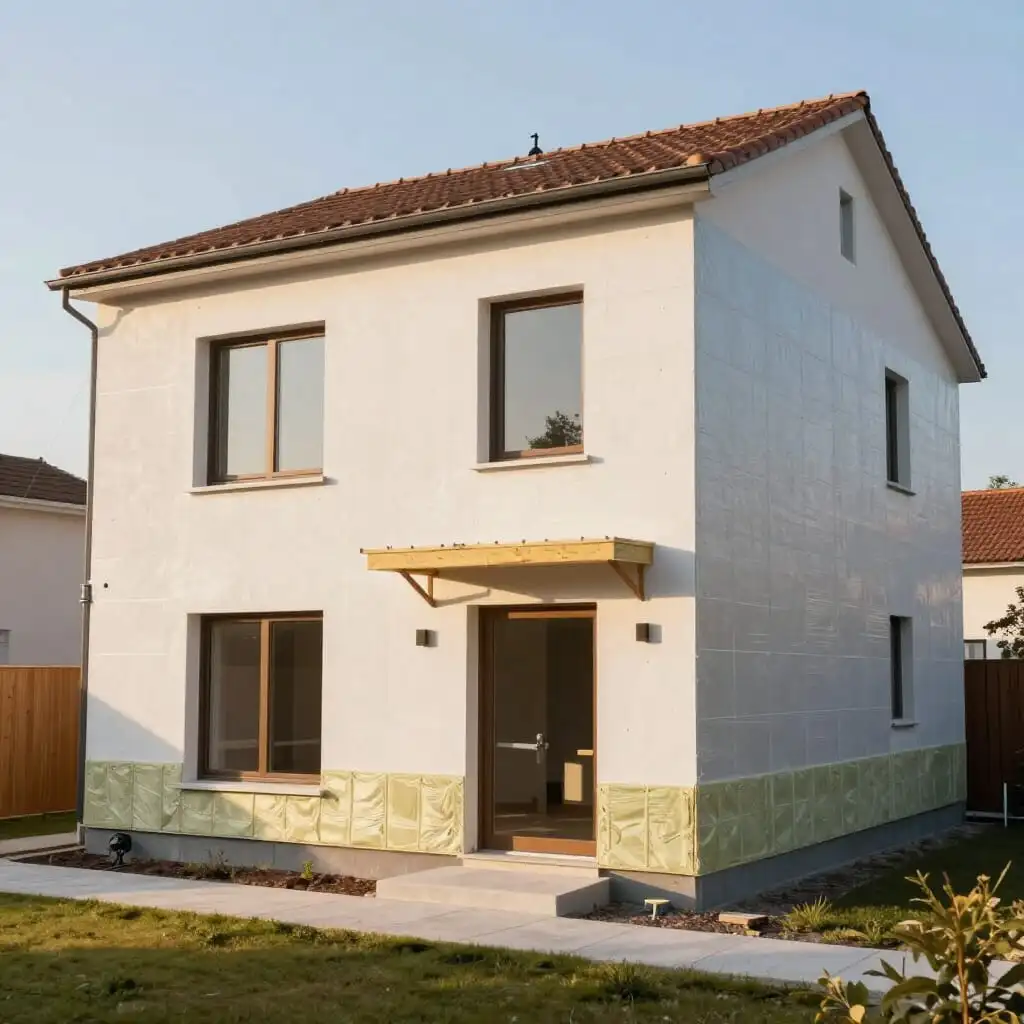 →
Wall Insulation: Interior vs. Exterior? Full Comparison
Compare interior (ITI) vs. exterior (ITE) wall insulation. Learn the pros, cons, costs, and how to choose the best option for your home renovation.
Lire l'article → →
Priority Home Renovation: Where to Start
Find the ideal order for home renovation projects. From insulation to safety and heating, follow our expert advice to prioritize effectively.
Lire l'article → →
Energy Renovation: Where to Start? A Complete Guide
Learn the essential steps for energy renovation: from diagnostics and grants to RGE professionals. A practical guide to optimizing your home improvements.
Lire l'article →