
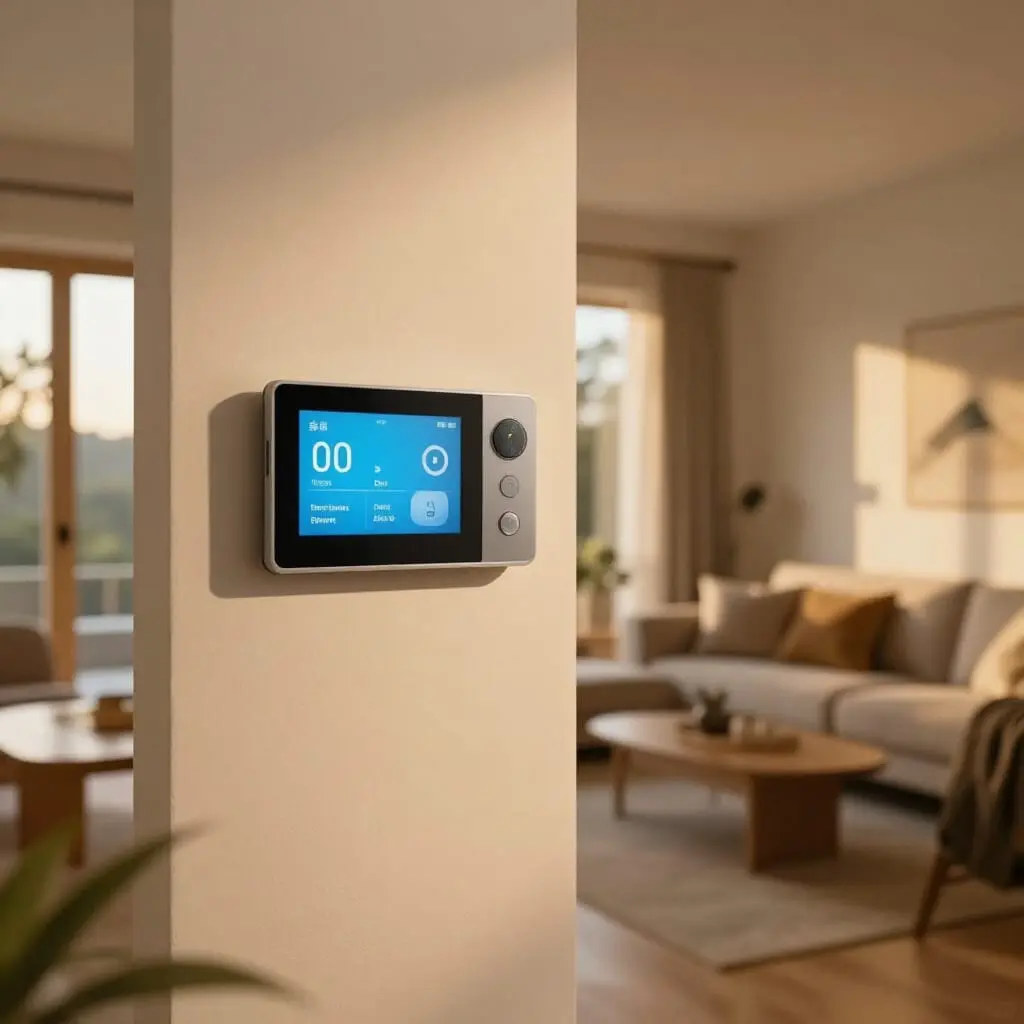
How to Sustainably Reduce Your Heating Bills?
- Heating accounts for approximately 66% of a household’s energy consumption: it is the primary lever for savings.
- Lowering the thermostat by just one degree can reduce your heating bill by about 7% without a noticeable loss in comfort.
- Reducing electric heating bills involves room-by-room control, utilizing off-peak hours, and using smart thermostats.
- Reducing gas heating bills relies on boiler maintenance, bleeding radiators, and scheduling heating periods.
- Even partial insulation (curtains, seals, draft excluders) can limit up to 65% of heat loss in poorly insulated homes.
Reducing your heating bill doesn’t necessarily require major renovations: a simple thermostat adjustment, a boiler that hasn’t been serviced in two years, or poorly adjusted radiators are often enough to explain a 20% to 30% overconsumption. Whether your home is heated by electricity, gas, or individual radiators, the keys to saving money fall into three categories: daily settings, equipment maintenance, and intelligent control via smart home technology. This guide details, system by system, concrete solutions to sustainably reduce your heating consumption without sacrificing your home’s thermal comfort.
Understanding where the money goes before taking action
Before changing anything, you need to know where the loss is occurring. In an average home, heating represents about 66% of total energy consumption, far ahead of water heating or appliances. Practically speaking, this means that even a small percentage gained on heating carries more weight on your total bill than almost any other energy saving.
Three sources of waste recur systematically. First, thermal loss through walls, windows, and roofs: in a poorly insulated home, this can represent between 15% and 65% of the heat produced, literally escaping through walls and lofts before it even warms the room. Second, inappropriate heating settings: maintaining a uniform temperature in all rooms, including those rarely used (guest bedrooms, laundry rooms), drives up consumption without any real benefit. Finally, the lack of scheduled heating: heating an empty house during the day or an unoccupied bedroom at night is equivalent to throwing energy away.
Identifying these three points allows you to prioritize your actions. A newer, well-insulated home will benefit most from optimizing settings and scheduling, while an older home should first address thermal leaks before investing in more sophisticated control equipment. This hierarchy prevents you from spending money on a high-end smart thermostat when drafts are still whistling under your doors.
Lowering the thermostat: the most cost-effective solution
The simplest action is also the most effective: lowering the thermostat by one degree can reduce your heating bill by approximately 7%. On an average annual bill, this represents tangible savings for almost zero effort, as a one-degree difference is barely perceptible in terms of comfort once you get used to it.
The recommended temperature is around 19°C in living areas, 17°C in bedrooms, and can drop to 16°C in low-traffic rooms. Heating a hallway or a rarely used bathroom to the same temperature as the living room is a waste of energy. This is where room-by-room control comes in: smart thermostatic radiator valves (TRVs), installed on each radiator, allow you to precisely adjust the temperature based on how the space is actually being used, without daily manual intervention.
At night, lowering the temperature by an additional 2 to 3 degrees during sleeping hours does not affect comfort—a warm duvet is enough to compensate—and generates cumulative savings throughout the year. A programmable thermostat, or better yet, a smart thermostat controlled via smartphone, automates this day/night cycle so you don’t have to think about it. This is one of the fastest-to-pay-off investments in smart home heating, with a return on investment generally under two years.
Reducing your electric heating bill
For homes heated by electricity, bills can skyrocket as soon as radiators run continuously without fine-tuned regulation. The first step is to check the type of radiators installed: traditional electric convection heaters (often called “toaster heaters”) heat up quickly but cool down just as fast, forcing the device to restart constantly. Inertia heaters (using cast iron, ceramic, or heat-transfer fluid) store heat and release it gradually, which limits heating cycles and reduces associated electricity consumption.
The second lever concerns your electricity contract. Shifting some of your consumption to off-peak hours—when appropriate for your equipment—allows you to take advantage of lower rates during certain time slots. This option is particularly interesting for inertia heaters, which can accumulate heat during off-peak hours at night and release it during the day.
The third lever, often underutilized, is centralized control. A smart home hub connected to all the electric radiators in the house allows you to program scenarios (away, home, night) and prevent mistakes—a radiator left running in an empty room for several hours is a pure loss. Combined, inertia settings, appropriate pricing, and automated control can measurably reduce electric heating consumption over a full season without moving house or undertaking heavy work.
Reducing your gas heating bill
Gas heating follows a different logic, centered more on boiler efficiency than on room-by-room control. A poorly maintained boiler loses efficiency year after year: the mandatory annual service is not just a regulatory formality; it directly affects combustion efficiency and, therefore, the amount of gas needed to heat the same volume of water.
Bleeding your radiators is one of the most neglected tasks. When air accumulates in the system, the radiators heat up less effectively even if the boiler is running at full capacity—a radiator that is cold at the top and hot at the bottom is a classic sign that it needs bleeding. This task, which can be done in a few minutes with the right tool, immediately improves heat distribution.
Scheduling heating periods is the second major pillar. A boiler that runs continuously, including during absences or at night, consumes gas unnecessarily. A programmer, paired with an ambient thermostat, allows you to synchronize the boiler’s operation with the actual rhythm of life in the household rather than a fixed setting used for years.
Finally, a thermostatic valve on each radiator allows you to locally adjust the hot water flow according to the room’s usage, complementing the global boiler settings with fine-tuned, room-by-room adjustments without overconsuming in low-traffic areas.
Insulating without major renovations
Insulation remains the fundamental factor that determines the effectiveness of all other settings: in a poorly insulated home, up to 65% of the heat produced can escape through walls, roofs, and windows. Before considering major energy renovation projects, several simple and inexpensive steps can significantly limit these losses.
Sealing windows and doors with adhesive weatherstripping addresses the most obvious drafts, which are often responsible for that “chilly” feeling that drives people to turn up the heat unnecessarily. Thick curtains, closed at nightfall, add an extra insulating layer against windows, a classic thermal weak point. Door draft excluders (or “door snakes”) placed at the bottom of doors leading to unheated rooms or the outdoors complete this setup at a low cost.
For homes where investment is an option, insulating unused attic space remains the project with the best cost-to-savings ratio, as heat naturally rises toward the roof. Next comes wall insulation, which is more expensive but relevant in homes built before modern thermal regulations. Once completed, these works multiply the effect of heating settings and smart home technology: a well-controlled radiator in a poorly insulated room is still destined to heat air that simply escapes.
Smart control: the real game-changer
Beyond occasional adjustments, smart home gadgets dedicated to heating transform how you consume energy daily. A smart thermostat does more than just display a temperature: it learns household habits, anticipates heating needs based on your usual return time, and automatically turns off the heating if an absence is detected via smartphone.
Smart thermostatic radiator valves (TRVs), installed individually on each radiator, allow for granular control that is impossible to achieve manually: each room receives exactly the programmed temperature without daily intervention. When paired with open-window sensors, they automatically turn off the relevant radiator while the room is being ventilated, preventing you from heating the outdoors—a frequent and costly scenario when not automated.
Smart plugs and centralized management modules offer a third level: real-time visualization of consumption per device, radiator by radiator. This data concretely changes user behavior, as people quickly identify energy-hungry equipment and adjust their habits accordingly. Investing in this smart home equipment remains moderate compared to insulation work, with a quick return on investment for households heated by electricity, where every degree and every hour of operation directly impacts the bill.
Daily habits that make a difference
Some actions cost nothing and add up over the entire heating season. Ventilating the house for 5 to 10 minutes a day—with windows wide open rather than just cracked—renews the air without permanently cooling the walls, unlike prolonged ventilation with small openings which allows walls to cool deeply.
Never placing furniture or curtains in front of a functioning radiator seems obvious, yet this is one of the most frequently ignored habits: an obstructed radiator distributes heat poorly, which forces the system to compensate by increasing power or heating duration to reach the same perceived ambient temperature.
Closing shutters and curtains at night limits heat loss through windows, even with modern double glazing. Closing doors to unheated rooms prevents heat from diffusing into spaces that don’t need it, concentrating energy where it is useful. Finally, regular equipment maintenance—dusting radiators and checking filters for forced-air systems—maintains their efficiency over time; a dirty radiator loses heat distribution efficiency without the electrical or gas consumption decreasing proportionally.
Financial assistance and next steps
For households wishing to undertake more structural work—such as attic insulation, boiler replacement, or installing a heat pump—various government incentives and financial assistance programs may be available. These aids vary depending on household income and the type of work planned, with rates being regularly updated.
Before starting any work, an energy performance audit can help identify priority areas and evaluate the real return on investment for each action. Energy providers also offer consumption simulators that help you visualize the expected impact of changing equipment or improving insulation before making any financial commitment.
For households that do not wish to undertake major works immediately, combining free actions (settings, bleeding radiators, sealing drafts) with a targeted investment in one or two smart devices—such as a programmable thermostat or smart TRVs on the most used radiators—is often the best starting point. This progressive approach allows you to measure the real effect of changes on your bill before considering larger projects, helping you direct your budget toward the areas where the gains will be most significant.
How much can you save by lowering the heating by one degree?
Lowering the set temperature by just one degree can reduce your heating bill by approximately 7%, with no significant impact on perceived comfort.
What is the ideal temperature for heating a home?
The general recommendation is 19°C in living areas, 17°C in bedrooms, and 16°C in low-traffic areas like hallways or guest rooms.
How can I quickly reduce my electric heating bill?
Prioritize inertia heaters over traditional convection heaters, install smart TRVs, and program heating schedules based on actual occupancy.
Do smart thermostats actually save money?
Yes. By automating temperature drops at night and during absences, they prevent manual setting errors, which represent a large portion of daily energy waste.
How can I reduce my gas heating consumption without changing my boiler?
Annual boiler maintenance, regular radiator bleeding, and installing a programmer paired with an ambient thermostat are enough to significantly reduce consumption without replacing equipment.
Should I turn the heating off completely at night?
No. It is better to lower the temperature by 2 to 3 degrees rather than turning it off entirely, as restarting a cold heating system consumes more energy than maintaining a reduced temperature.
Do inertia heaters really consume less than traditional convection heaters?
Yes. They store and release heat gradually, which limits the repeated heating cycles of a convection heater and stabilizes electricity consumption over time.
Which free actions have the most impact on a heating bill?
Lowering the thermostat by one degree, bleeding radiators, sealing window drafts, and closing shutters at night are among the highest-impact free actions.
Sources
- Tips for reducing your electricity bill – economie.gouv.fr
- 5 tips to reduce your heating bill – OoTravaux
- Heating with gas: solutions to limit the bill – ADEME

D'autres conseils Energy-Efficient Renovation
 →
Attic Insulation: Why It’s Your #1 Renovation Priority
Learn why attic insulation is a top priority: up to 30% of heat escapes through the roof. 4-7 year ROI. Discover how to save…
Lire l'article → →
Energy Renovation: Where to Start? A Complete Guide
Learn the essential steps for energy renovation: from diagnostics and grants to RGE professionals. A practical guide to optimizing your home improvements.
Lire l'article → →
Home Renovation Financing: 2026 Grants and Loans
Learn how to fund your home renovations. From government grants and eco-loans to condo financing: the complete guide to managing your budget.
Lire l'article → →
Heat Pump Guide: Costs, Grants & Installation Tips
Everything you need to know about heat pumps: how they work, costs (€4,200–€25,000), available subsidies, and how to choose the right model for your…
Lire l'article →