
Window Replacement: Is It Really Worth It?
- Window replacement costs an average of €400 to €1,200 per window, including installation, depending on the material chosen.
- Expected heating savings range between 10% and 15%, which is approximately €170 to €255 per year for a household with €1,700 in annual heating costs.
- The return on investment (ROI) varies significantly depending on the condition of your current windows, your local climate, and how many units you replace.
- 2026 subsidies (such as MaPrimeRénov’, CEE, 5.5% VAT, and eco-PTZ) reduce the net cost and significantly shorten the payback period.
- Acoustic comfort, security, and increased property value are key factors in calculating true long-term profitability alongside energy savings.
Replacing your windows is a major expense, and the question deserves an honest answer rather than a sales pitch: on energy savings alone, the investment often takes 15 to 25 years to break even—a timeline much longer than attic insulation. Real profitability depends on three concrete factors: the thermal efficiency of your current windows, the price of your heating fuel, and the subsidies available to you. While the purely financial calculation might seem unfavorable in the short term, the math changes radically when you factor in comfort, property value, and available government grants.
The actual cost of window replacement
Before discussing profitability, we need to establish the starting budget. For a standard-sized window (around 115 x 100 cm), the price including installation typically fluctuates between €350 and €1,200, including materials and labor. PVC remains the most economical solution, offering good thermal performance for a tight budget. Aluminum is more durable and offers a sleeker, thinner profile, but generally costs 20% to 40% more; this is partially offset by modern thermal break technology, which is now standard in recent models. Wood, prized for its classic aesthetic, often sits at the higher end of the scale, between €800 and €1,500 per window, and requires regular maintenance.
For an average-sized house with eight to ten windows, the total budget ranges from €4,000 to €12,000, excluding subsidies. Two main factors can drive up the bill: the installation technique (full removal of old frames is more thorough but more expensive than a retrofit installation onto existing frames) and site accessibility. The price per window generally decreases when you replace several units in a single visit, thanks to shared travel and labor costs. This is your first tip for better ROI: replacing a single window is often more expensive per unit than replacing a full set.
What kind of energy savings can you actually expect?
Old window units often account for up to 30% of the total heat loss in a poorly insulated home, and according to ADEME (the French Agency for Ecological Transition), an uninsulated house loses about 15% of its heat through its windows. Upgrading to modern double glazing can reduce heating consumption by 10% to 15%. For a household with an annual heating bill of around €1,700, this represents a saving of €170 to €255 per year, or roughly €2,550 cumulative savings over ten years.
It is important to add some nuance here: windows generally only account for 10% to 15% of a home’s total heat loss, trailing far behind the roof and walls. In other words, while new windows improve comfort and lower bills, they are rarely enough on their own to radically transform the energy performance of a home that is poorly insulated elsewhere. The real savings also depend on what you are replacing: moving from single glazing to modern double glazing yields a much higher gain than replacing double glazing from the early 2000s that is already performing reasonably well.
Calculating your Return on Investment (ROI)
The basic calculation is simple: divide the total cost of the work by the annual savings generated on your heating bill. Let’s look at a concrete example: eight windows at €800 each represents a budget of €6,400. With an annual saving of €220, the theoretical payback period is approximately 29 years—a duration that may exceed the useful life of some entry-level window models.
This calculation changes as soon as you include financial aid: with €2,000 in combined subsidies, the net cost drops to €4,400, bringing the payback period down to about 20 years. While still a long time, this is consistent with the average lifespan of well-installed PVC or aluminum windows, which typically exceeds 25 to 30 years. The key takeaway: strictly from an energy standpoint, window replacement is almost never the fastest renovation to pay for itself—attic insulation or replacing an aging heating system often offers a much quicker return. The profitability of windows is found more in the total duration of property ownership and secondary benefits.
Factors that influence your project’s profitability
No generic calculation applies to every situation, as several variables can push the results in different directions. The initial state of your windows matters most: replacing 1980s-era single glazing yields a much higher return than replacing modern, high-performance double glazing. Climate and exposure also play a direct role: a house in a mountainous region or one heavily exposed to north-facing winds will see a faster ROI than a home in a temperate, well-oriented climate. Your heating method also influences the math: electric or oil heating, which are more expensive per kWh, makes the annual savings much more significant than gas heating.
The number of windows replaced at once reduces the unit cost and improves the thermal consistency of the building envelope. Finally, the quality of the installation determines much of the final result: a high-performance window that is poorly installed, creating thermal bridges around the frame, can lose a significant portion of its theoretical energy gain. Using an RGE-certified professional (a French certification for energy renovation) is a requirement to access subsidies, but it is also your technical guarantee for a properly sealed installation.
Double glazing vs. triple glazing: which is more profitable?
Triple glazing is generally 50% to 80% more expensive than high-performance double glazing. For a set of eight windows, this extra cost can represent an additional €2,000 to €4,000. In exchange, the thermal gain from triple glazing is real: moving from a Uw value of 1.3 (standard double glazing) to a Uw of 0.7 (high-performance triple glazing) represents a gain of about 45% on the windows themselves.
The problem is that this gain applies to a component that only represents 10% to 15% of a home’s total heat loss. Installing triple glazing in a house with uninsulated walls is essentially over-investing in a secondary area while a more important one remains neglected. Triple glazing is best justified in specific cases: mountain climates, highly exposed north-facing facades, proximity to significant noise sources, or “passive house” projects aiming for maximum performance. For most households in temperate climates on a budget, high-performance double glazing offers the best cost-benefit ratio.
Financial aid that changes the math in 2026
The subsidies available in 2026 do not cover the entire project, but they significantly reduce your out-of-pocket expenses and, therefore, the payback period. MaPrimeRénov’ provides amounts ranging from €40 to €100 per window depending on household income, provided the Uw coefficient is 1.3 or lower. CEE grants (energy savings certificates) can be added to this and are cumulative. A reduced VAT rate of 5.5% (instead of 20%) applies automatically if the work is carried out by an RGE-certified professional in a home that is more than two years old.
The eco-PTZ (an interest-free eco-loan) allows you to finance up to €7,000 of work specifically for glazing, a useful option for spreading out the expense without straining your monthly budget. The common requirement for most of these aids is the use of an RGE professional and meeting a minimum performance threshold—a point to verify before signing any quote, as using a non-certified contractor will automatically disqualify you from subsidies.
Benefits that the energy calculation alone doesn’t show
Reducing the profitability calculation solely to heating savings ignores a large part of the value created by the project. Acoustic comfort is immediate and particularly appreciated in urban areas or near busy roads—a benefit that attic insulation can never provide. The elimination of drafts and improved natural light concretely change the daily feel of a room, often before any reduction in your utility bill is even noticeable.
From a real estate perspective, new windows improve the home’s Energy Performance Certificate (EPC) rating, a criterion that is becoming increasingly decisive for resale or rental, especially given the tightening regulations on homes rated F and G. A better-rated home sells more easily and sometimes at a higher price—an effect that is hard to quantify precisely but is regularly observed by real estate professionals. Finally, modern window units enhance security (laminated glass, multi-point locking systems), a major selling point for middle-class families looking to secure their homes without installing additional smart security gadgets.
Replace one window at a time or all at once?
When facing a tight budget, the temptation is to spread the work out, window by window. This strategy is valid in specific cases: an emergency (broken glass, rotted frames), a need for targeted comfort in a specific room, or a desire to stagger expenses over several years. However, from a strictly financial standpoint, a complete replacement in a single intervention remains more profitable: labor costs are spread across more units, subsidies are often more advantageous for a global project, and the thermal consistency of the home is improved all at once rather than in stages.
For households that must stagger the project, a simple rule helps with prioritization: start with the most exposed and least efficient windows—north-facing, large glass surfaces, or the coldest room in the house. This progressive approach allows you to capture the bulk of the thermal gain in the first few years before completing the rest of the project as your budget allows.
Our verdict: real profitability, but it looks different for everyone
Strictly in terms of energy math, replacing windows is almost never the fastest renovation to pay for itself: the payback period frequently exceeds 20 years, compared to much shorter timelines for attic insulation or replacing an obsolete heating system. However, this should not be seen as a reason to avoid it: profitability is built on multiple levels. 2026 subsidies significantly reduce the net cost, the comfort gain is immediate, and the improvement to your EPC rating has concrete property value at the time of resale.
For a middle-class household, the best approach is to treat the project as a global investment rather than just a line item on a heating bill: combine available subsidies, prioritize high-performance double glazing over triple glazing (unless in specific cases), target the most heat-leaking windows first, and include acoustic comfort and security in your equation. Viewed this way, window replacement remains a wise choice—provided you don’t expect a rapid return on investment based solely on energy savings.
How long does it take to see a return on window replacement?
Based strictly on energy criteria, expect between 15 and 25 years, depending on the condition of the old windows, your climate, and the subsidies you use. With combined subsidies, this period can be reduced by several years.
Is replacing just one window worth it?
It can be in specific cases: emergencies, targeted comfort for a single room, or a staggered budget. From a global perspective, a complete replacement is more advantageous because labor costs are distributed across more units.
Is triple glazing more profitable than double glazing?
Rarely, except in cold climates, on highly exposed facades, or for passive houses. Its 50% to 80% higher cost compared to double glazing is only justified in those specific situations.
What subsidies are available for window replacement in 2026?
MaPrimeRénov’ (€40 to €100 per window depending on income), CEE grants, a reduced VAT of 5.5%, and the eco-PTZ (up to €7,000 for glazing), provided you use an RGE-certified professional.
PVC or aluminum: which material is more profitable?
PVC offers the best cost-to-thermal-performance ratio for a limited budget. Aluminum costs more but is attractive for its durability and design, especially for large sliding glass doors.
What budget should I set to replace all the windows in a house?
For an average-sized house with eight to ten windows, expect to pay between €4,000 and €12,000 excluding subsidies, depending on the material and installation technique chosen.
Does replacing windows increase the resale value of a property?
Yes, indirectly, through the improvement of the Energy Performance Certificate (EPC) rating. This is an increasingly decisive factor for selling or renting, especially for moving a property out of the F and G rating classes.
Sources
- How much do you save with double glazing? Price and ROI — Kazamea Énergie
- Energy savings when switching to double glazing? — Octopus Energy
- Insulated windows: is it really profitable in the long term? — Place A
- Changing windows: energy, financial, and comfort profitability — Mon Habitat Immobilier
- Window replacement prices in 2026 — Prix Travaux M2
- Window replacement subsidies 2026 — Fournisseurs-electricite.com
- Triple glazing: is it actually useful or not? — Isolation Future
- Triple glazing: advantages, price, and when it’s necessary — RénovMaison

D'autres conseils Energy-Efficient Renovation
 →
Priority Home Renovation: Where to Start
Find the ideal order for home renovation projects. From insulation to safety and heating, follow our expert advice to prioritize effectively.
Lire l'article →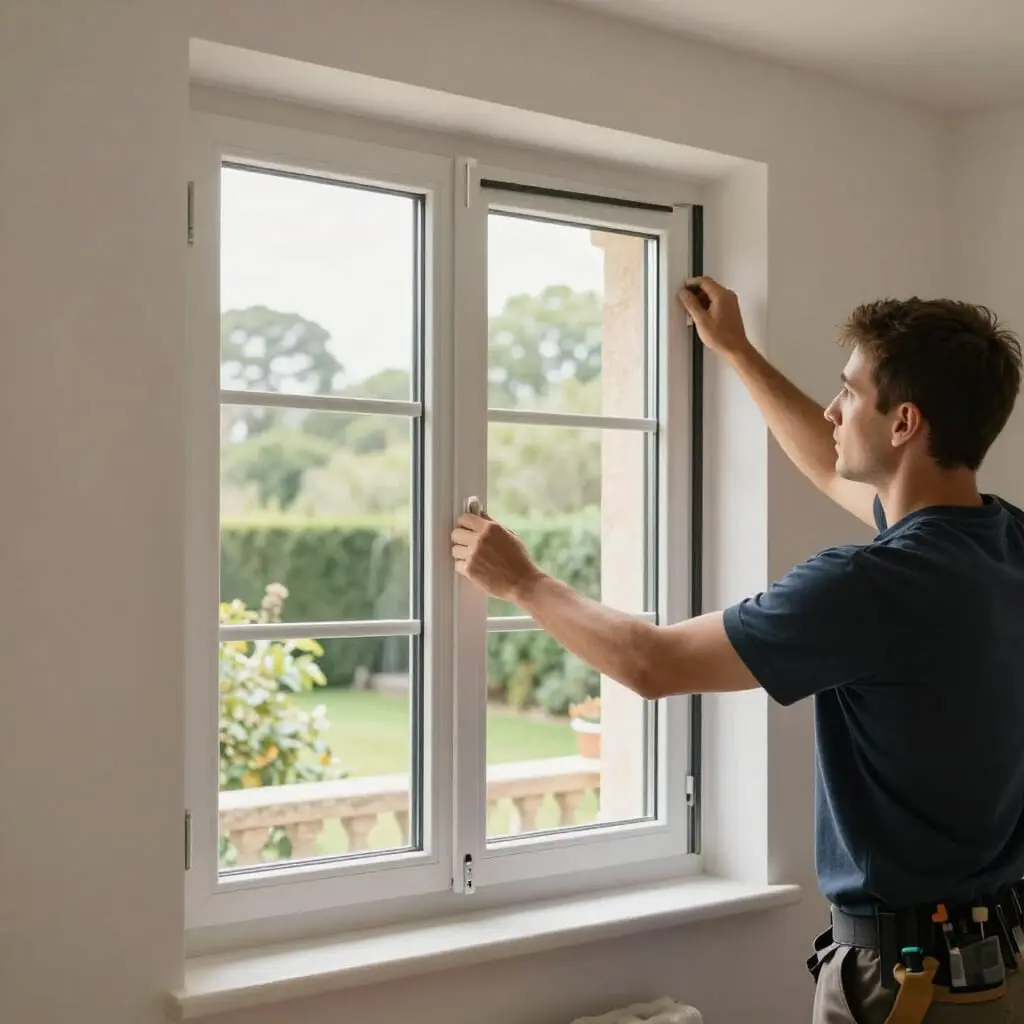 →
Window Replacement: Is It Worth the Investment in 2026?
Is replacing your windows worth it? Discover costs, energy savings, 2026 government subsidies, and the real ROI for your home improvement project.
Lire l'article → →
Home Renovation Financing: 2026 Grants and Loans
Learn how to fund your home renovations. From government grants and eco-loans to condo financing: the complete guide to managing your budget.
Lire l'article → →
Attic Insulation: Why It’s Your #1 Renovation Priority
Learn why attic insulation is a top priority: up to 30% of heat escapes through the roof. 4-7 year ROI. Discover how to save…
Lire l'article →