
Smart Lighting: Solutions That Truly Change Your Daily Routine
- Daily simplicity: Automated triggers, remote shut-off, and one-tap mood settings streamline your routine.
- Energy efficiency: Presence sensors and scheduling can reduce lighting-related energy consumption by up to 30%, according to some estimates.
- Enhanced security: “Presence simulation” scenarios make your home look occupied even when you’re away.
- Increased autonomy: Seniors and people with reduced mobility gain independence by eliminating the need to move to reach a switch.
- Affordable entry: Equipping a single room requires only a modest investment (a few dozen dollars) and no major renovations.
A light that turns on automatically when you step into the hallway at night, shuts off on its own in a child’s bedroom once they’ve fallen asleep, or simulates activity while you’re on vacation—this is the real-world impact of smart lighting, far beyond the “tech gadget” label. Contrary to popular belief, the value isn’t found in a long list of app features, but in the elimination of daily frictions: the struggle to find a switch in the dark, the light left on after leaving the house, or the inability to set the right mood for the evening. For the average middle-class household, the equation is simple: a modest investment, rolled out room by room, for immediate comfort and measurable long-term savings. What follows details the use cases that actually make a difference, along with their limitations, moving past the technical spec sheets.
Effortless Daily Comfort
The first thing users notice about smart lighting isn’t spectacular; it’s the absence of friction. Getting up at night to use the bathroom without fumbling for a switch, saying “turn everything off” from the couch instead of walking through every room, or arriving home with arms full of groceries to a perfectly lit entryway. These are micro-actions repeated dozens of times a day; removing them has a cumulative effect on perceived comfort that far outweighs their apparent simplicity.
Scheduling plays a central role in this comfort. A dimmed light that gradually brightens in the morning is a much gentler way to wake up than a harsh ceiling light. In the evening, a “wind-down” scene that lowers intensity and shifts toward warm tones naturally prepares the body for sleep. Once configured, these settings run in the background without daily intervention—this is precisely what distinguishes smart lighting from a simple dimmer: the logic is no longer manual; it adapts to the rhythm of the home.
Presence sensors add another layer of utility, particularly in transition areas like hallways, stairs, or bathrooms. The light activates as you approach and shuts off a few minutes after you leave, without anyone having to think about it. For families with young children, this automation also prevents lights from being left on after a quick trip through a room—a minor annoyance individually, but one that adds up on the utility bill and creates unnecessary mental clutter over time.
Perceived Security and Peace of Mind
Beyond comfort, smart lighting changes how secure a home feels, especially during long absences. The most popular scenario is “presence simulation”: lights turn on and off at varying times in different rooms while you’re on vacation, creating the illusion from the street that someone is home. Unlike a simple plug-in timer set to a single hour, a smart system can vary the rooms and times from day to day, making the pattern far more convincing than a repetitive mechanical timer.
Smart lighting also integrates seamlessly with other smart home devices, such as outdoor motion sensors or cameras. Movement detected in the backyard can trigger a floodlight, deterring potential intruders without the homeowner needing to take action. This type of cross-automation—a sensor triggering a light, which then sends a notification to a smartphone—is one of the most valued concrete benefits, as it transforms isolated gadgets into a coherent system.
However, it is important to be realistic about security: smart lighting is not a replacement for a professional alarm system or active monitoring. In fact, a poorly configured system (lights turning on at the exact same time every night) can actually signal a predictable routine. The real value depends on the quality of the setup, not just the presence of the hardware.
Real Energy Savings, But Not Automatic
The promise of energy savings is the most common selling point, but it requires nuance. Smart lighting doesn’t reduce consumption by magic; the savings come from the combination of low-energy LED bulbs and automations that prevent waste—automatically turning off lights in empty rooms, adjusting brightness based on natural light, and tailoring schedules to actual occupancy. Some industry experts suggest that electricity bills for lighting can be reduced by up to 30% when these automations are properly implemented, especially in homes where lights were previously left on out of habit.
The most effective mechanism remains presence detection coupled with a short timeout: a hallway or garage light that shuts off two minutes after the last person leaves prevents waste without requiring constant vigilance. In a multi-person household, these settings accumulate gains across all transition areas, whereas traditional switches rely entirely on individual discipline.
For these savings to be tangible, two conditions must be met: the use of genuine low-energy bulbs and the active use of automations rather than purely manual control via an app—which, in practice, offers no energy gain over a traditional switch. Savings come from the usage, not the connectivity itself.
Creating Ambience Without Extra Equipment
One of the most practical, yet often underestimated, benefits is the ability to adapt lighting to a specific moment without installing new fixtures. A single smart bulb can provide bright white light for working during the day, a warm, dimmed glow for a dinner party, or a colorful atmosphere for a game night—all controlled via smartphone, without changing hardware or adding more lamps.
This flexibility changes how living spaces are used. A living room that served only as a relaxation area can become a well-lit workspace during the day with a simple brightness adjustment, eliminating the need for an extra desk lamp. Similarly, a dining room can switch from functional lighting for kids’ homework to a cozy atmosphere for dinner in a single gesture.
Pre-set scenarios—often called “scenes” in dedicated apps—allow you to link multiple lights to a single trigger: pressing one button or saying a short phrase can simultaneously activate the living room, kitchen, and entryway lights according to predefined settings. This centralization removes the need to adjust every light source individually, which is the true added value in daily use: not the color of the bulbs, but the removal of repetitive tasks.
A Significant Boost in Autonomy for Seniors and Those with Limited Mobility
Smart lighting is particularly impactful for the elderly or those with reduced mobility, addressing critical needs rather than just convenience. Eliminating the need to move to reach a switch, especially at night, directly reduces the risk of falls—a major concern in this demographic, as nighttime movement without sufficient light is a frequent cause of home accidents. Lighting that activates automatically between the bedroom and the bathroom removes this moment of vulnerability without requiring complex technical learning.
Voice control, when paired with a smart assistant, offers a valuable alternative for those with grip issues or limited upper-body mobility. Asking aloud to turn a room on or off avoids the need to manipulate a switch that may be poorly positioned or hard to reach. For caregivers, some systems also allow them to remotely verify that a light has been turned on or off, providing peace of mind without being intrusive.
However, this requires a thoughtfully planned installation with simplified interfaces. An overly complex app or too many confusing scenarios can alienate users who are not tech-savvy. Proper onboarding and support are just as critical to the system’s effectiveness as the technology itself.
What Smart Lighting Doesn’t Solve
To be honest about the real-world impact, several limitations must be noted. Dependence on a stable internet connection or home network remains the primary friction point: a router failure or internet outage can temporarily disable remote functions, although most systems maintain a manual backup via the physical switch. For those starting out, it is advisable to prioritize solutions that remain functional even without a network.
“App fatigue” is another common pitfall. A home equipped with several different brands may end up with as many apps as devices, which cancels out some of the simplicity benefits. Before expanding a system room by room, it is better to verify compatibility between protocols (such as Matter or Zigbee) to avoid this fragmentation.
Finally, smart lighting does not replace the need for a thoughtful lighting plan. A poorly lit room doesn’t become comfortable just because the bulb is controllable via phone: connectivity optimizes existing lighting; it does not correct a poor choice of fixture or insufficient wattage. This is often overlooked by households that invest in technology before reviewing the basic layout of their light sources.
How to Get Started Without Breaking the Bank
Contrary to popular belief, you don’t need to outfit your entire home at once to see the benefits. The most effective approach for a middle-class budget is to target rooms where the benefits are immediate: the hallway or entryway for nighttime safety, the living room for atmosphere, and the exterior for deterrence and evening comfort.
Two main approaches exist, neither of which usually requires major electrical work. The first is simply replacing a standard bulb with a smart bulb in an existing socket—the fastest solution with zero installation. The second involves a smart module or switch installed behind the existing wall switch, which then controls the entire circuit, including standard bulbs. This second option is ideal for rooms with multiple light points, as it avoids replacing every single bulb individually.
The entry cost remains accessible: equipping a single room typically costs a few dozen dollars, allowing you to test the utility before expanding. This staged rollout also gives you time to discover which scenarios are actually useful, rather than cluttering your home with automations you’ll never use.
Does smart lighting work without internet?
Most systems maintain manual control via the physical switch during an outage, but remote functions and advanced automations generally require an active internet connection.
Do I need to rewire my house to install it?
No, in the vast majority of cases. Smart bulbs screw directly into existing sockets, and smart modules are installed behind wall switches without heavy construction.
Does smart lighting actually save electricity?
Savings depend on usage: they come from the LED technology and automations like presence detection, not the connectivity itself. Controlling a light via an app rather than a switch provides no inherent energy gain.
Can I mix different brands of smart lighting in the same home?
Yes, but it often increases the number of apps you have to manage. It is better to check protocol compatibility (like Matter or Zigbee) before mixing brands.
Is smart lighting suitable for seniors?
Yes, especially for reducing fall risks at night via presence sensors, provided the interface is kept simple and they are helped with the initial setup.
Which room should I equip first?
The hallway or entryway for nighttime safety, and the living room for ambiance, are generally the most rewarding starting points.
Can smart lighting replace a security alarm?
No. It can enhance perceived security through presence simulation, but it is not a substitute for a dedicated surveillance or alarm system.
Sources
- Ecological Lighting: The Benefits of Smart Lighting — domotique-facile.com
- Smart Lighting: Uses, Savings, and Useful Automations — smartdom.fr

D'autres conseils Electrical Systems & Smart Home
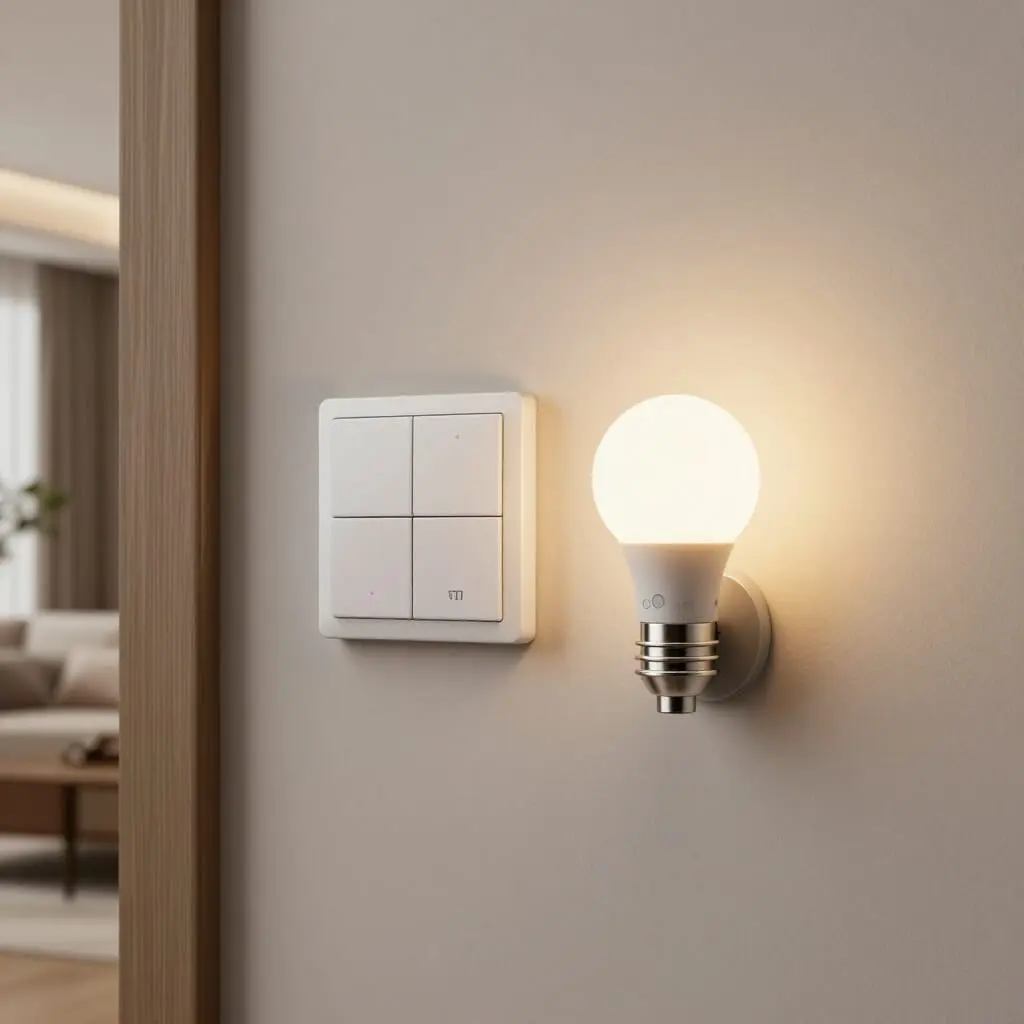 →
Smart Switches vs. Smart Bulbs: Complete Comparison Guide
Smart switches or smart bulbs? Compare costs, installation, and features to find the best smart lighting solution for your home.
Lire l'article →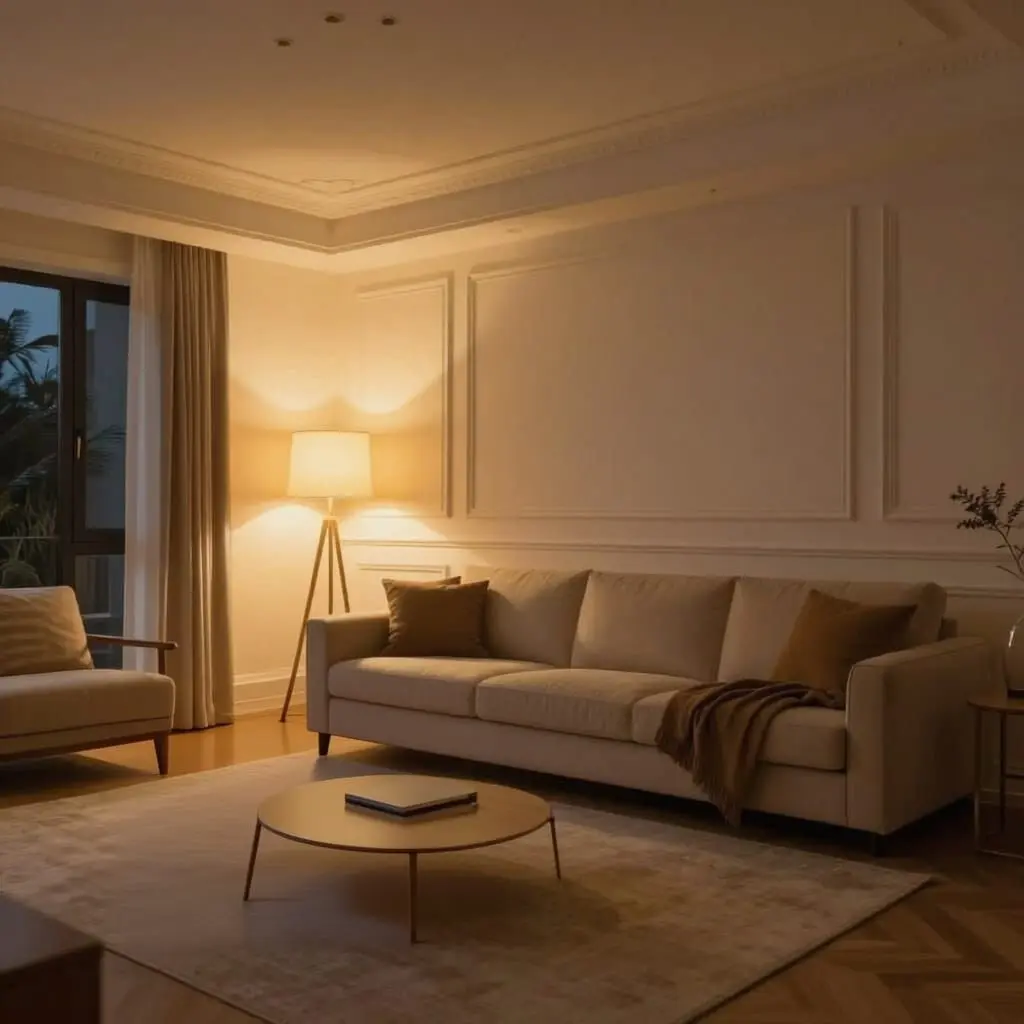 →
Smart Lighting: Practical Solutions for Daily Life
Discover how smart lighting simplifies your life: automation, up to 30% energy savings, home security, and affordable accessibility.
Lire l'article → →
Replacing Your Electrical Panel: When Is It Necessary?
Learn when to replace your electrical panel: signs of wear, non-compliance, and safety risks. A complete guide to costs and electrical standards.
Lire l'article →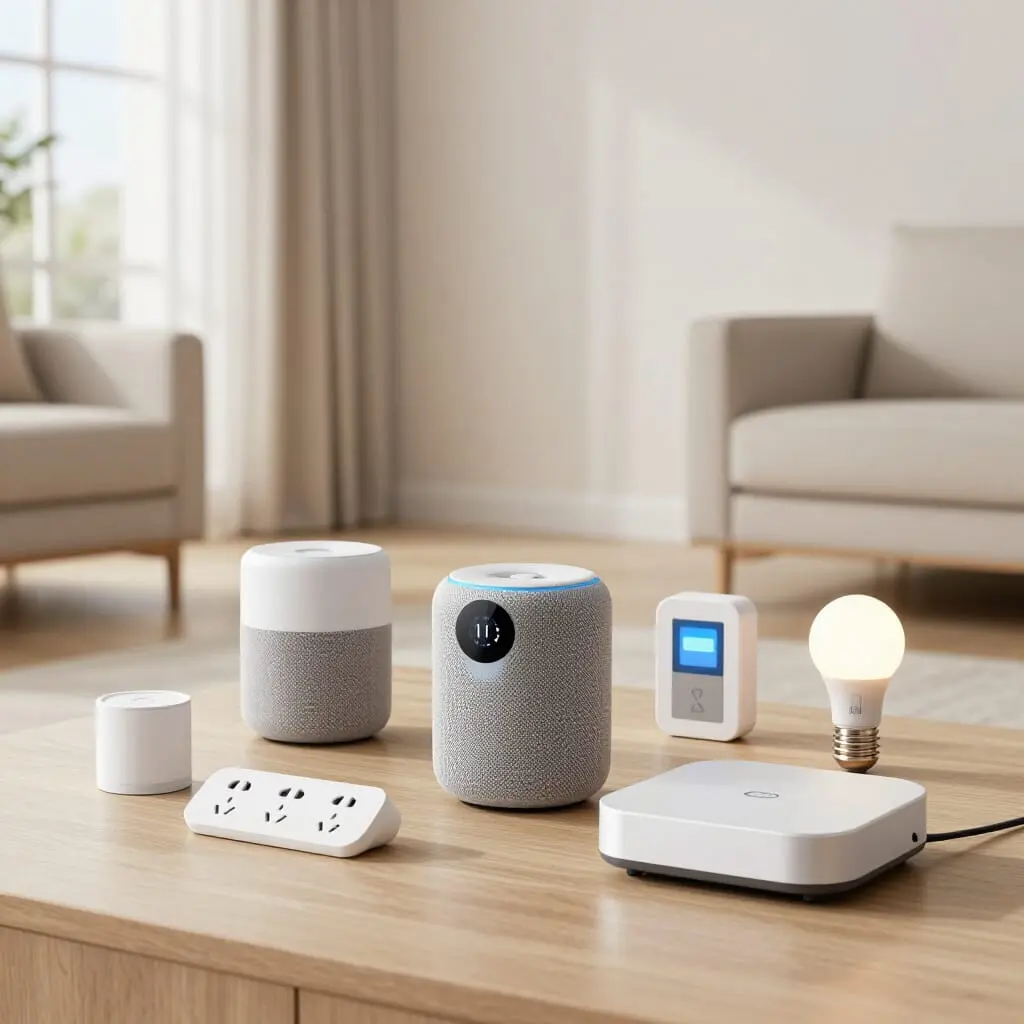 →
Smart Home Essentials: The Best Gear for Beginners
Discover 5 essential smart home devices: hubs, lighting, thermostats, security, and smart plugs. A complete guide to getting started.
Lire l'article →